PET Preform and Bottle Lightweighting
2026/10/17
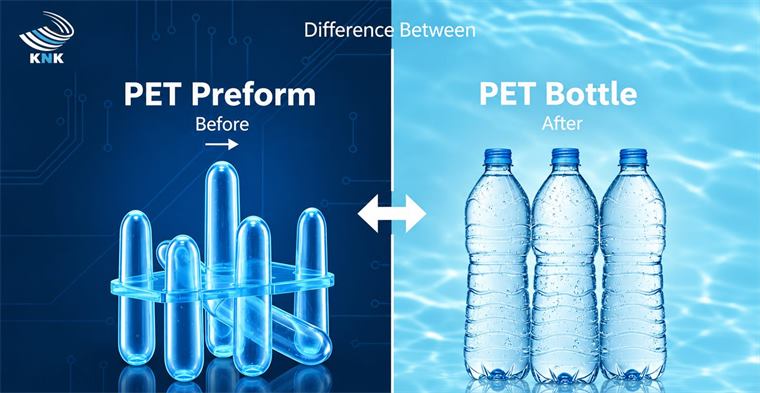
PET lightweighting is not simply about using less material; it is about finding the lowest reliable preform weight for a specific bottle, product, and production line. Successful weight reduction requires balancing material efficiency, blow-molding performance, bottle strength, and production consistency.
What Does Lightweighting Mean in PET Packaging?
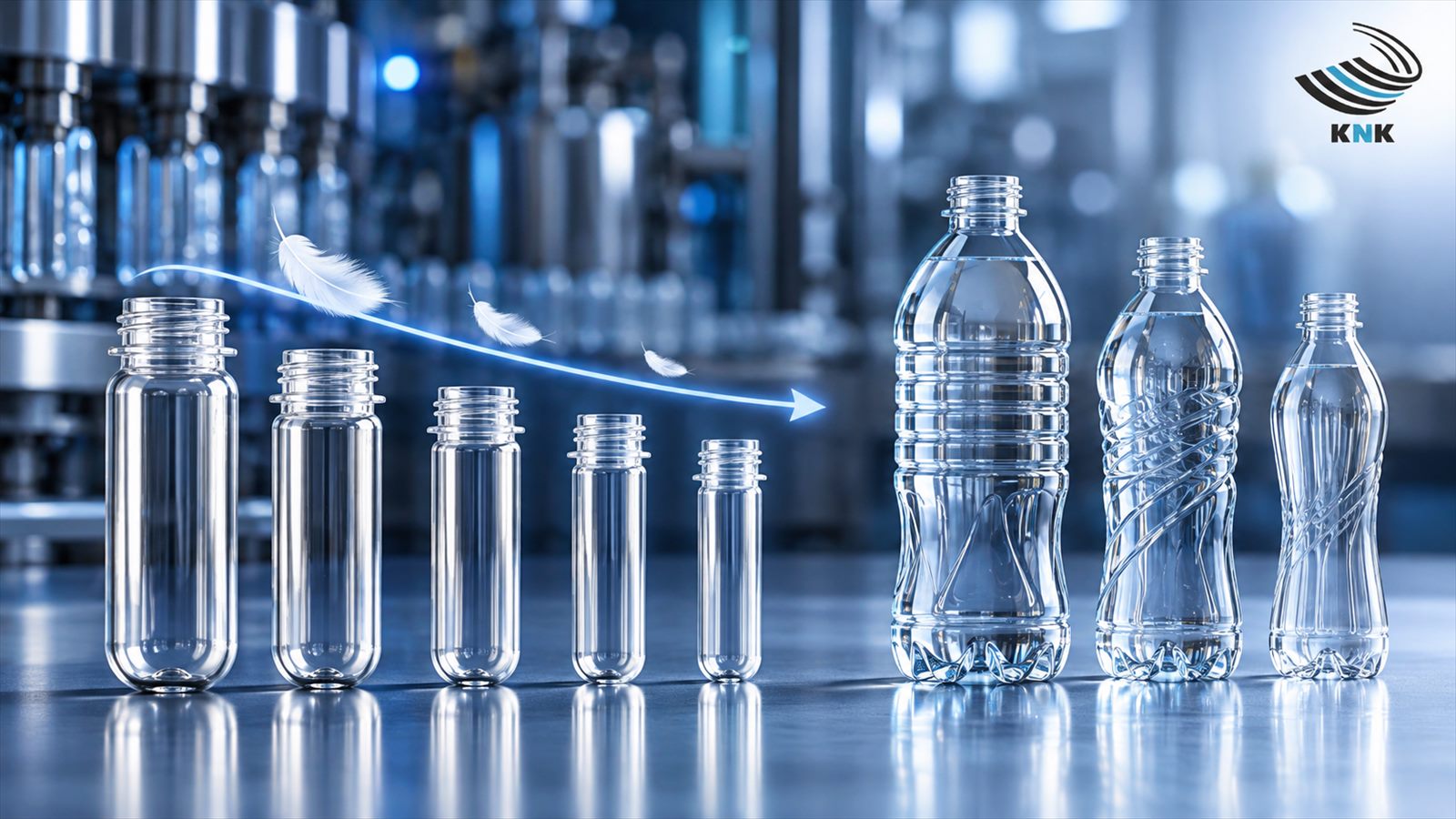
In PET packaging, lightweighting means reducing the amount of material used in a preform or bottle while maintaining the performance required for its intended application. The goal is not simply to produce the lightest possible preform, but to identify the lowest reliable weight for a specific bottle, product, and production line. When properly engineered, lightweighting can reduce PET consumption and improve production economics. When pushed too far, however, it may increase scrap rates, make blow molding more sensitive to process settings, or reduce bottle stability.
Why Does Preform Weight Matter?
A reduction of only a few grams may appear insignificant at the individual-unit level, but in high-volume production it can translate into a substantial reduction in total PET consumption. However, preform weight alone does not define performance. Bottle volume and geometry, neck finish, closure type, filling conditions, transportation requirements, and blow-molding equipment all influence the appropriate preform weight. Even two bottles with the same nominal capacity may require different preform specifications because of differences in shape, wall distribution, base design, or mechanical requirements.
Is a Lighter PET Preform Always More Economical?
Not necessarily. Using less PET can reduce raw-material consumption, but the true economic result depends on the entire production process. If a lighter preform causes higher scrap levels, slower line speeds, additional machine adjustments, or inconsistent wall-thickness distribution, the initial material saving may be offset by higher operating costs. A professional lightweighting project should therefore evaluate material consumption, process stability, energy use, scrap, production speed, and finished-bottle performance together, rather than comparing preform prices alone.
What Happens When PET Weight Is Reduced Too Far?
Excessive weight reduction can result in insufficient or uneven material distribution in the finished bottle. Certain areas may become too thin, bottle rigidity may decrease, or the blow-molding process may become more sensitive to temperature and pressure variations. This does not mean that lightweight PET bottles are inherently lower in quality. A bottle designed specifically for a lower material weight can perform very well. The risk arises when weight is reduced without adapting the preform, bottle design, mold, and process conditions as a complete system.
Why Are Two Preforms of the Same Weight Not Necessarily Equal?
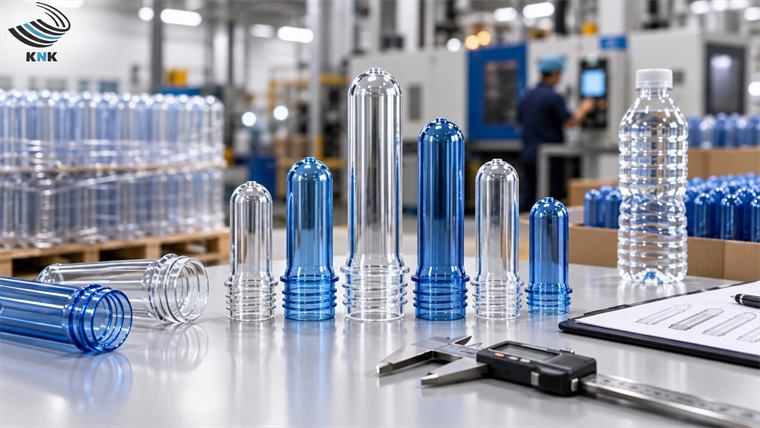
Two PET preforms may have the same gram weight yet behave differently during blow molding. Preform length, body geometry, material distribution, neck finish, thermal behavior, and compatibility with the bottle mold can all affect the final result. For this reason, buyers should not evaluate PET preform quality only by weight. The correct question is whether the preform can repeatedly produce the required bottle under the actual conditions of the production line.
How Should PET Lightweighting Be Tested?
Lightweighting should be confirmed through production trials rather than theoretical calculations alone. A lighter preform should be tested on the actual blow-molding equipment, with attention to process stability, finished-bottle appearance, wall-thickness distribution, closure performance, mechanical behavior, and conditions of storage and transportation. For applications such as mineral water, carbonated beverages, milk, or juice, the test program should also reflect the specific requirements of the packaged product. Weight reduction should be supported by measurable performance data.
Conclusion: The Lightest Preform Is Not Always the Best Preform
Successful PET lightweighting is about finding the right balance between material efficiency, bottle performance, and production reliability. Reducing preform weight can lower PET consumption and contribute to more efficient packaging, but only when the bottle continues to meet its functional requirements consistently.
At Khosh Noosh Kavir (KNK), evaluating opportunities to optimize product weight while maintaining expected performance is part of the broader approach to product development and industrial efficiency. Customers considering a lighter PET preform can provide information such as bottle volume and design, neck finish, current preform weight, closure type, product application, blow-molding equipment, and production volume for a more accurate technical assessment.
The best PET preform is not simply the lightest one; it is the one that uses material efficiently while delivering stable, repeatable performance in the final bottle.
Photos