What Is the Right PET Preform Weight for Mineral Water? A Guide to 29/25 PET Preforms
2026/10/31
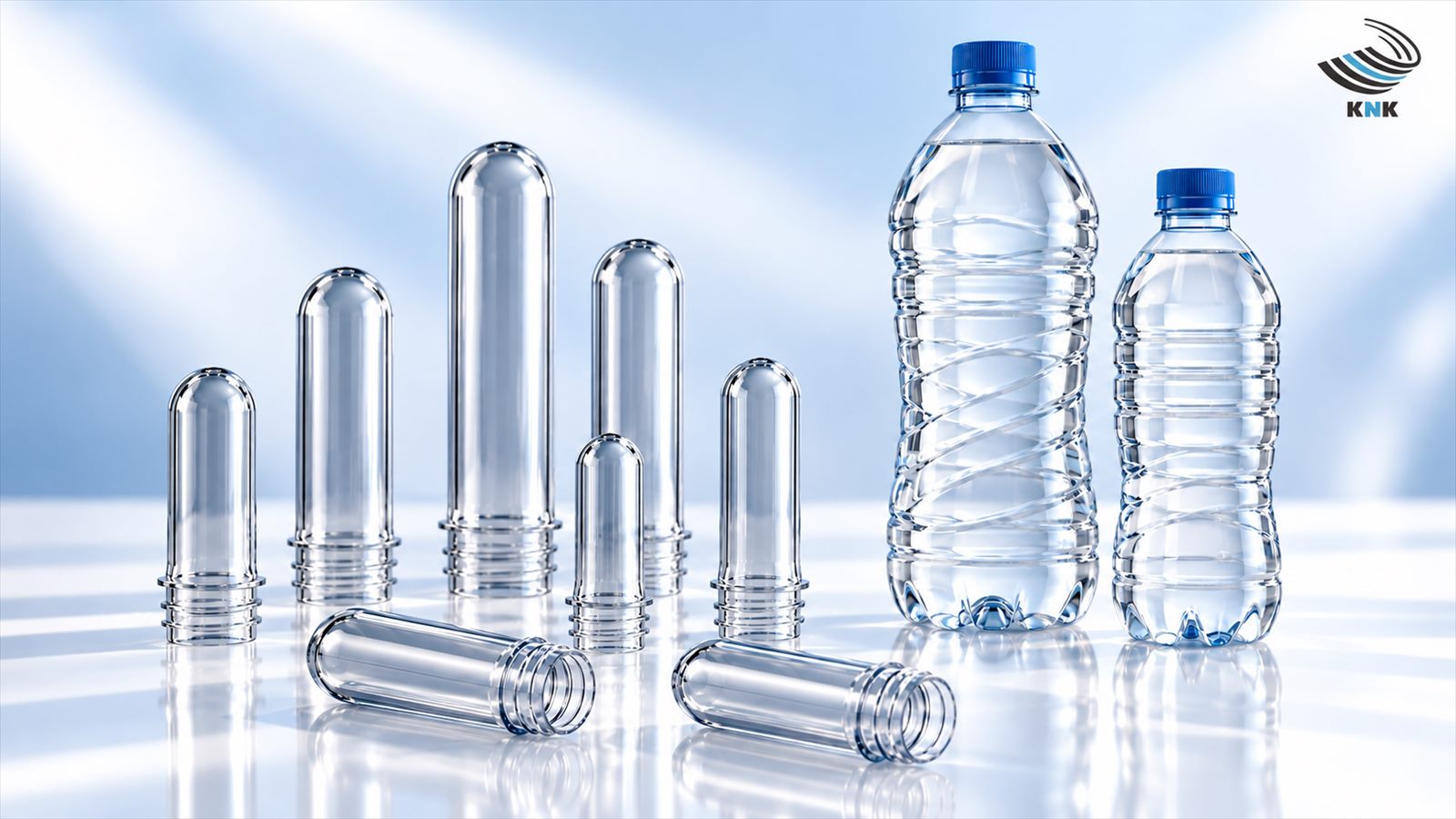
The right PET preform weight for a mineral water bottle cannot be determined by bottle volume alone; bottle geometry, mould design, neck finish, and blow-molding conditions also matter. This guide explains how to select a 29/25 mineral water preform and why the lightest or heaviest option is not necessarily the most economical choice.
Is There One Ideal PET Preform Weight for Every Mineral Water Bottle?
No. Bottle volume is an important starting point, but it is not enough to determine the right PET preform weight for mineral water. Two bottles with the same nominal volume may have different heights, diameters, base geometries, ribs, shoulders, and mechanical requirements. These differences affect how PET material stretches and distributes during blow molding. The better purchasing question is therefore not simply, “What preform weight should I use for a 1.5-litre bottle?” but rather: Which preform specification can consistently produce my bottle on my mould and production line at an efficient overall cost?
What Is a 29/25 PET Preform and Why Is It Used for Mineral Water?
The 30 mm Short Neck 29/25 PET preform is an important preform family used in mineral water packaging. The neck finish is particularly important because the neck and thread geometry formed during preform production largely remain unchanged during bottle blowing and must therefore be compatible with the intended closure and capping system. Khosh Noosh Kavir currently offers its 30 mm 29/25 mineral-water preform family in clear and blue versions and across an 11–25 g weight range, with listed specifications including 11, 12, 23, 24, and 25 g. This range gives manufacturers several options, but the final selection should still be based on the actual bottle and production conditions rather than weight alone.
What Determines the Correct Mineral Water Preform Weight?
Several variables must be evaluated together. Bottle capacity matters, but so do bottle geometry, mould design, material distribution, neck finish, closure system, blow-molding equipment, production speed, and transportation conditions. During stretch blow moulding, PET must be distributed appropriately across the shoulder, sidewalls, transition zones, and base. A particular gram weight may perform well for one bottle design but behave differently in another. Even two preforms of identical weight can produce different results because their length, body geometry, wall distribution, and thermal response may differ.
Is a Lighter Mineral Water Preform Always Better?
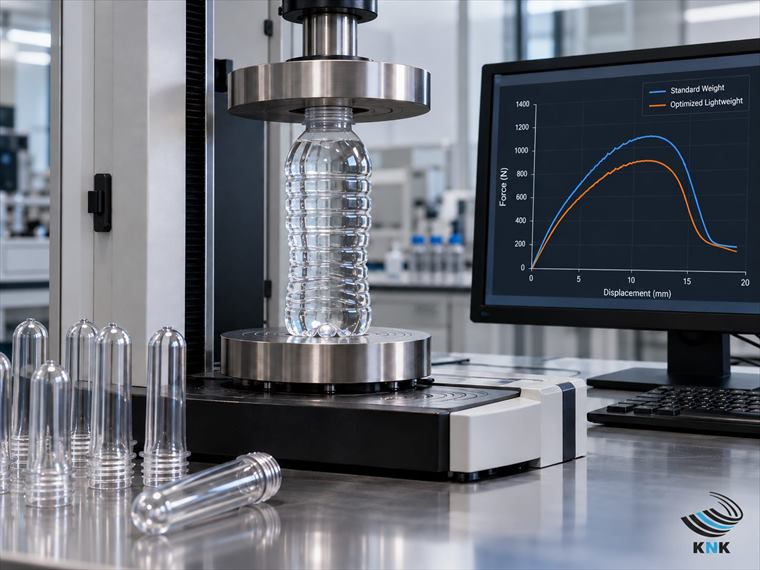
Not necessarily. Reducing preform weight can lower PET consumption, but lower weight does not automatically mean lower total production cost. If excessive lightweighting causes unstable blowing, uneven wall thickness, higher scrap rates, slower production, or reduced bottle performance during filling and transportation, the initial material saving may disappear. The objective should therefore be to find an optimized weight—the lowest practical material usage that still provides stable production and the required bottle performance. For this reason, changing from one gram weight to another should ideally be confirmed through trials on the actual blow-molding line.
What Should Buyers Check Before Ordering Mineral Water Preforms?
A professional purchasing decision should go beyond asking for “the price of a 30 mm preform.” Buyers should provide the manufacturer with key information such as bottle volume and design, 29/25 neck finish, current or target preform weight, closure type, mould specifications, blow-molding equipment, production rate, required color, order quantity, and delivery requirements. For new bottle designs, changes in preform weight, or a new supplier, production-line sample testing is highly recommended. Preform appearance alone cannot demonstrate how reliably it will perform during heating, stretching, blowing, filling, storage, and transportation.
Conclusion: The Best Preform Weight Is the One That Matches Your Bottle and Production Line
There is no universal gram weight that can be recommended for every mineral water bottle. The correct choice results from the relationship between preform weight, bottle design, 29/25 neck finish, mould, blow-molding process, closure, and real operating conditions. A lighter preform can be highly efficient when properly engineered, while a heavier preform does not automatically guarantee a stronger or better bottle.
Khosh Noosh Kavir (KNK) manufactures 30 mm Short Neck 29/25 PET preforms for mineral water applications in multiple weight options. For a more accurate technical and commercial evaluation, customers can provide their bottle design, target weight, closure, mould and blow-molding specifications, and required production volume to the KNK team.
The best mineral water preform is neither simply the lightest nor the heaviest—it is the preform whose weight and design are correctly matched to the bottle and the production line.