What Is IML Packaging?
2026/11/22
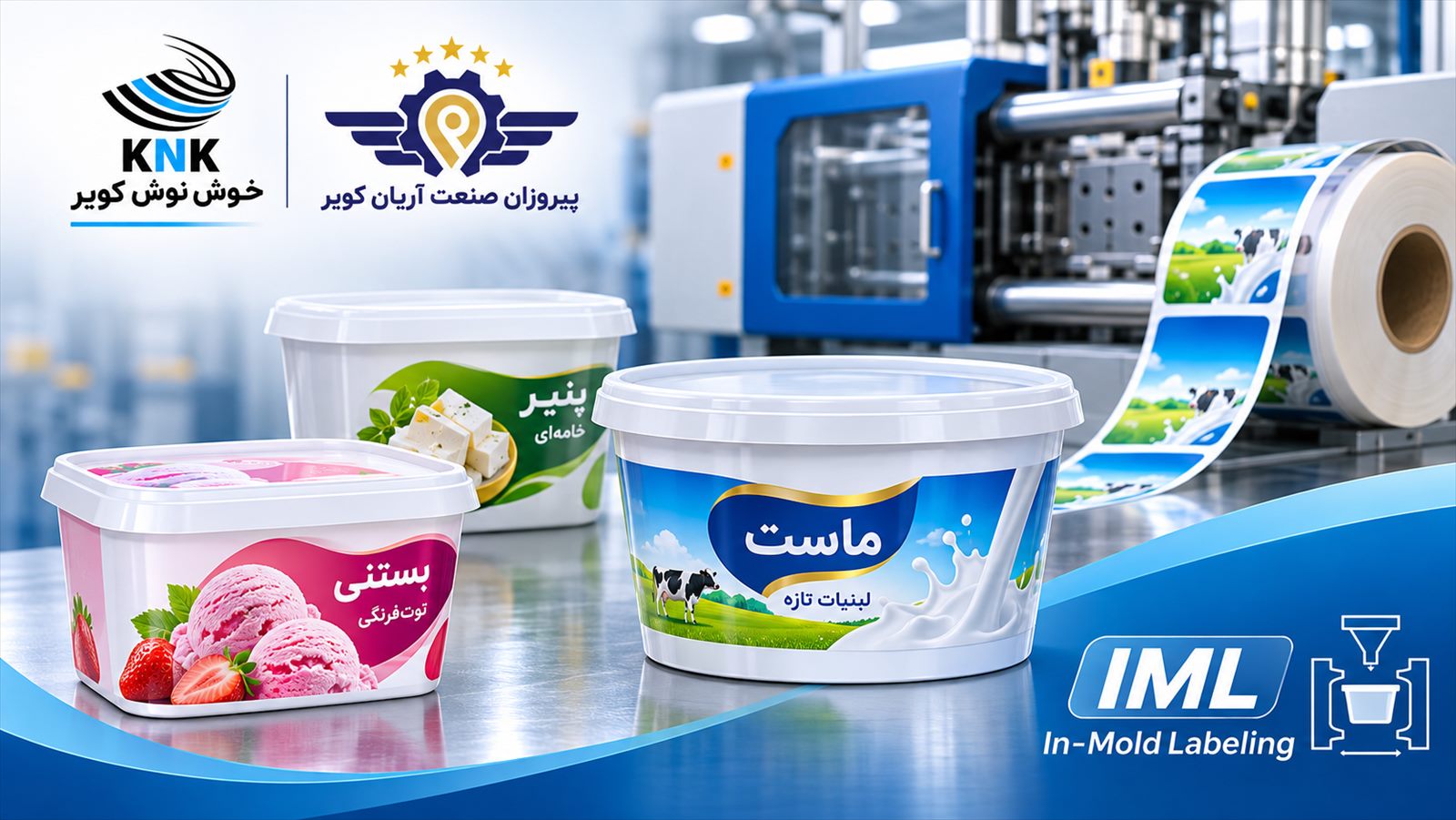
IML packaging integrates pre-printed labels with plastic containers during molding, enabling durable graphics and attractive packaging designs. Explore how In-Mold Labeling works, its benefits, quality requirements, and applications in dairy, ice cream, and food packaging.
In-Mold Labeling Technology, Benefits, and Applications in the Food Industry
In the food packaging industry, product appearance is more than a decorative feature. It plays an important role in brand identity, consumer experience, and market competitiveness. Manufacturers of dairy products, ice cream, packaged foods, and other consumer goods continuously seek packaging solutions that combine attractive designs with high-quality printing, durability, and reliable performance.
One technology that integrates plastic container manufacturing with product decoration is In-Mold Labeling (IML). In this process, a pre-printed label becomes an integral part of the plastic container during molding.
IML technology enables manufacturers to produce containers with detailed graphics, diverse designs, and durable labeling. In many food packaging applications, it provides an alternative to conventional labeling methods.
But what exactly is IML packaging, how does it work, and what advantages can it offer food manufacturers?
What Is IML Packaging?
IML stands for In-Mold Labeling, a technology in which a pre-printed label is positioned inside a mold before the plastic component is formed.
In a typical injection molding process, molten polymer is injected into the mold and comes into contact with the label under controlled manufacturing conditions. As the component forms and cools, the label becomes integrated with the container's surface.
Unlike conventional labeling methods, in which a label is applied after the container has been manufactured, IML combines the labeling and molding stages.
As a result, this technology can produce packaging with a seamless, professional appearance while eliminating the need for a separate label application process in many production systems.
IML can be used with different plastic forming technologies. However, one of its most common applications is the manufacturing of injection-molded plastic containers, particularly polypropylene packaging for the food industry.
How Are IML Containers Manufactured?
Manufacturing IML containers requires precise coordination between label design, handling equipment, mold engineering, and plastic molding machinery.
In a typical injection molding application, the process begins with printing the desired graphics and product information onto a suitable polymer film.
The printed labels are then cut according to the container's dimensions and geometry, preparing them for placement inside the mold.
Next, the labels are positioned in designated areas of the mold, usually using automated handling equipment or specialized robotic systems. Depending on the production setup, electrostatic charging or vacuum systems may be used to hold the labels in position.
Once the mold closes, molten plastic is injected into the cavity. Through contact with the label under controlled thermal and pressure conditions, the label bonds to the container during molding.
Finally, after cooling and mold opening, the finished container is removed with the printed label integrated into its surface.
The Role of Raw Materials in IML Container Manufacturing
Selecting suitable raw materials is an important factor in achieving high-quality IML packaging.
In many food packaging applications, polypropylene (PP) is used to manufacture IML containers because of its favorable processing characteristics and suitability for lightweight plastic packaging.
The label is typically made from a polymer film compatible with the container material. For polypropylene containers, PP-based or BOPP (Biaxially Oriented Polypropylene) labels are commonly used.
Compatibility between the label and container materials can influence bonding quality, final appearance, and packaging recyclability.
However, final material selection must take into account the packaged food, expected operating conditions, and applicable food-contact requirements.
What Are the Main Benefits of IML Packaging?
IML technology combines visual and functional characteristics within a single manufacturing process, making it an attractive packaging option for many food brands.
High-Quality Printing and Professional Appearance
One of the most important benefits of IML containers is the ability to reproduce detailed graphics, varied colors, and different visual finishes.
Depending on the label material and printing technology, manufacturers can use glossy or matte surfaces and designs that closely match the container's appearance.
This allows food manufacturers to present their brand identity through visually consistent and high-quality packaging.
Improved Label Durability
In conventional labeling, the label is attached after the container has been manufactured. In contrast, IML integrates the label into the container during the molding process.
This structure can reduce the likelihood of label edges lifting or separating under conditions compatible with the package design.
However, final resistance to moisture, scratching, chemicals, and storage conditions depends on the film, printing inks, protective coatings, and manufacturing quality.
Integration of Container Production and Labeling
In IML technology, container production and label bonding take place within the same molding cycle.
This integration can reduce or eliminate the need for separate labeling equipment and post-production label application.
For suitable production volumes, combining these operations may improve manufacturing efficiency and reduce certain operating costs.
Nevertheless, the initial investment in molds, robotic systems, and specialized equipment must also be considered when evaluating the overall economics of IML packaging.
Recyclability Through Compatible Material Design
Another potential advantage of IML packaging is the ability to use identical or compatible polymer materials for both the container and its label.
For example, packaging manufactured with a polypropylene body and polypropylene-based label may be better suited to PP recycling streams.
However, actual recyclability also depends on printing inks, additives, packaging construction, and the collection and recycling infrastructure available in the destination market.
Therefore, not every IML container should automatically be described as fully recyclable without further technical evaluation.
Applications of IML Packaging in the Food Industry
The food industry is one of the major application areas for IML technology because packaging must satisfy both functional and visual requirements.
IML Containers for Dairy Products
One of the most established applications of IML technology is the production of containers for yogurt, cream cheese, cream, and other dairy products.
For these products, print quality and effective presentation of brand information are important.
Containers must also be compatible with filling conditions, refrigerated storage requirements, and the hygienic specifications of the packaged product.
IML technology enables the production of dairy packaging with integrated graphics and a wide variety of visual designs.
However, food-contact safety and the container's suitability for a particular product must be independently verified based on material specifications and applicable testing requirements.
IML Packaging for Ice Cream and Desserts
In ice cream and dessert packaging, visual appeal plays an important role in product presentation and brand recognition.
IML technology allows manufacturers to apply a wide variety of graphic designs directly to the surfaces of molded containers.
These containers can be used for products in different sizes and packaging formats, provided that the container and label materials are suitable for the intended temperature conditions and application.
IML Containers for Other Food Products
Beyond dairy products and ice cream, IML technology is also used in packaging for certain sauces, butter, ready-to-eat products, and other packaged foods.
For these applications, container material and packaging design must be compatible with the characteristics of the food, filling conditions, expected shelf life, and distribution requirements.
Therefore, selecting IML packaging is not simply a matter of visual presentation. It should be considered part of the overall technical design of the packaging system.
What Is the Difference Between IML Packaging and Conventional Labeling?
The main difference between IML and conventional labeling lies in when and how the label is attached.
In conventional labeling methods, the container is manufactured first, and the label is subsequently applied using adhesives, specialized equipment, or other attachment methods.
With IML technology, the label is positioned inside the mold before the plastic component is formed, allowing it to bond with the container during production.
This difference can affect the final appearance, label durability, number of manufacturing steps, and equipment requirements.
However, IML is not necessarily the most suitable option for every product.
For projects involving limited production volumes or frequent design changes, the costs associated with equipment and label preparation may make alternative labeling methods more economical.
The appropriate technology should therefore be selected based on order volume, container design, required print quality, and overall production cost.
Quality Control in IML Container Manufacturing
The quality of an IML container depends on multiple factors, including raw material characteristics, mold design, label positioning accuracy, and molding process parameters.
One important consideration is the correct positioning of the label on the container.
Misalignment, wrinkling, or improper label placement can negatively affect the appearance of the finished product.
Label-to-container bonding quality, print consistency, surface integrity, and dimensional accuracy must also be evaluated.
For food packaging applications, additional assessments may include the container's mechanical strength, compatibility with filling conditions, and compliance with applicable food-contact material requirements.
Quality control procedures should be established according to the container type, packaged food, and actual conditions of use.
The Role of IML Packaging in Food Brand Development
In competitive food markets, packaging design is an important tool for communicating brand identity.
IML containers support graphic designs that integrate closely with the container's shape and can help improve brand name visibility, product differentiation, and the presentation of product information.
This feature can also benefit manufacturers that market several products within the same category, allowing them to maintain a consistent visual identity across their packaging range.
However, commercial success does not depend on printing technology alone. Product quality, pricing, distribution, and understanding customer expectations also remain important factors.
Piroozan Sanat Arian Kavir and the Development of IML Packaging Solutions
Expanding industrial activities in the packaging sector requires an understanding of raw materials, manufacturing processes, and evolving market requirements.
The industrial group began its operations in 1385 in the Iranian calendar (approximately 2006) under the Khosh Noosh brand, initially focusing on PET preform manufacturing.
As the group's activities developed, its operations expanded in 1400 in the Iranian calendar (approximately 2021) with the establishment of Piroozan Sanat Arian Kavir, specializing in bottle cap manufacturing and IML packaging products.
Today, Khosh Noosh Kavir and Piroozan Sanat Arian Kavir are two brands within the same industrial group under shared management, covering complementary areas of the packaging industry.
Within this structure, Khosh Noosh Kavir's experience in PET preform and bottle manufacturing, together with Piroozan Sanat's activities in bottle caps and IML packaging, reflects the expansion of the group's product portfolio to address different manufacturing needs.
Based in Yazd Province, Iran, the group continues to develop its industrial activities with an emphasis on raw material quality, management system requirements, and a customer-oriented approach.
What Should Manufacturers Consider When Selecting and Purchasing IML Containers?
Selecting IML containers for a food manufacturing facility should begin with the specific requirements of the packaged product.
Important considerations include container material, capacity and dimensions, food product characteristics, filling conditions, storage temperature, graphic design, and order volume.
Product samples should also be evaluated for visual quality, mechanical strength, production line compatibility, and applicable food-contact requirements.
Coordination between graphic design, label characteristics, and container specifications can help prevent technical problems and reduce manufacturing waste.
For bulk orders, consistent product quality and reliable supply capacity are also important considerations.
Conclusion: IML Combines Packaging Manufacturing with Visual Design
IML packaging is more than a method of printing on plastic containers. It is a technology that integrates container molding and label application into a single manufacturing process.
High-quality graphics, durable label integration, flexible visual design options, and the elimination of certain separate labeling operations are among its main advantages.
In the food industry, particularly in dairy, ice cream, and other consumer product packaging, properly engineered IML solutions can help manufacturers create packaging with a professional appearance and performance suited to the product's requirements.
Piroozan Sanat Arian Kavir, through its activities in IML packaging and bottle cap manufacturing, contributes to the development of the industrial group's packaging solutions alongside Khosh Noosh Kavir, a manufacturer of PET preforms and bottles.
Request Technical Consultation and an IML Packaging Quotation
If you operate in the dairy, ice cream, or broader food manufacturing industry and are looking for plastic packaging with customized designs and high-quality printing, IML technology may be a suitable option for your project.
To learn more about IML packaging products, discuss technical requirements, and request information about bulk orders and supply conditions, contact the sales team at Piroozan Sanat Arian Kavir.
Khosh Noosh Kavir and Piroozan Sanat Arian Kavir — Shared Expertise in Developing Modern Packaging Solutions.