How Are Bottle Caps Manufactured?
2026/11/22
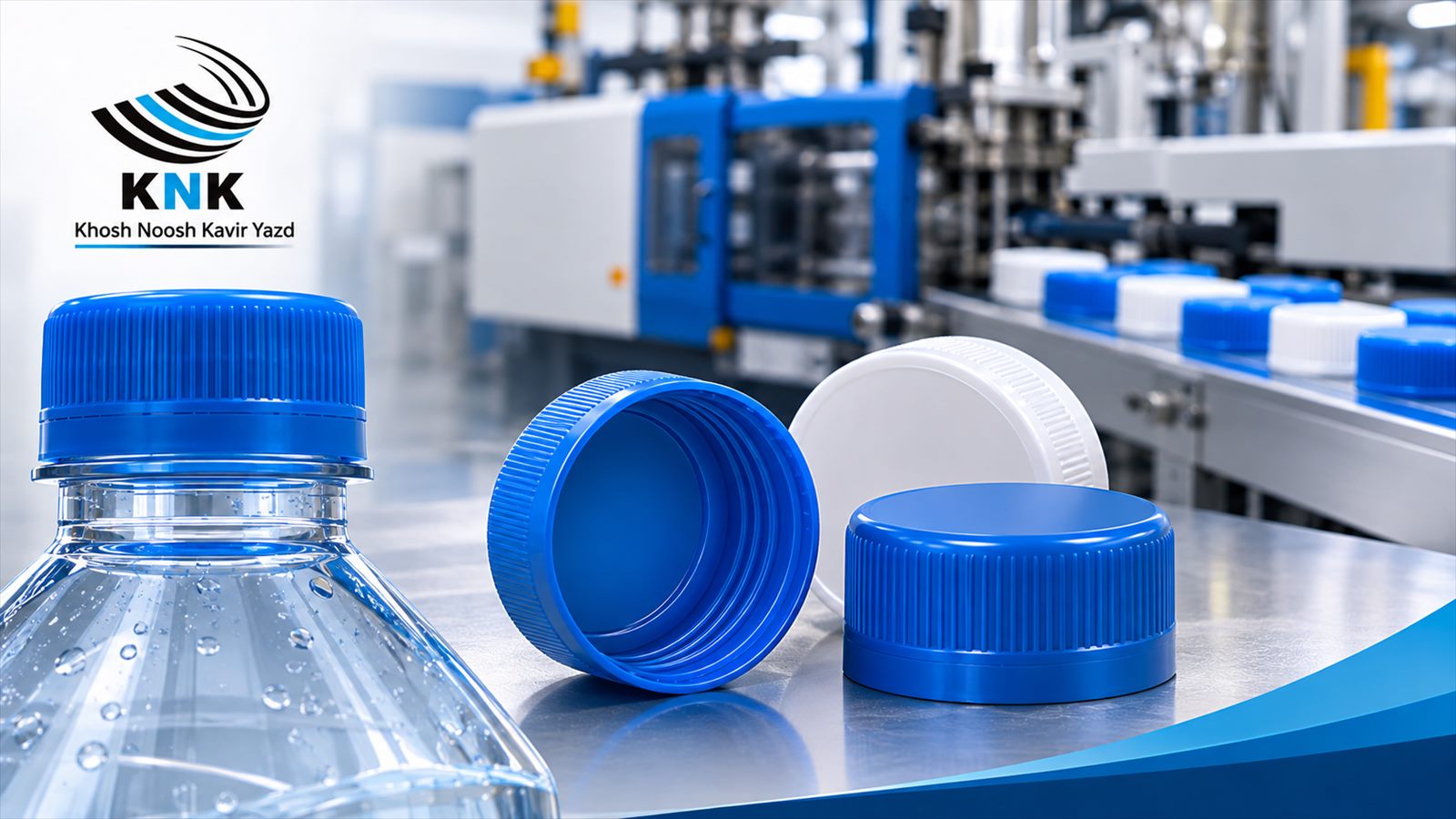
Discover how plastic bottle caps are manufactured, how PE materials and 38 mm neck finish specifications affect performance, and why sealing engineering and quality control matter. Explore the complementary expertise of Khosh Noosh Kavir and Piroozan Sanat Arian Kavir.
In the beverage and food packaging industry, bottle quality is not determined solely by the material, transparency, or appearance of the container. One of the most important components directly affecting packaging performance, leak prevention, and product quality preservation is the bottle cap—a small component whose role in the production and distribution chain extends far beyond its physical size.
A plastic bottle cap must be designed and manufactured to provide effective sealing, maintain dimensional compatibility with the bottle neck, deliver reliable performance under specified product conditions, and allow consumers to open and close the bottle easily.
These requirements are particularly important across various industries, from bottled water and fruit juice production to the packaging of milk and other dairy products. Even a minor dimensional difference in the cap threads or bottle neck, inappropriate raw material selection, or incorrect capping machine settings can compromise packaging performance.
But how are plastic bottle caps manufactured? What are the differences between polyethylene closures? Why are 38 mm bottle caps important in certain food and beverage packaging applications, and which factors determine their sealing performance?
This article examines bottle cap manufacturing processes, raw material characteristics, sealing engineering principles, neck finish specifications, quality control tests, and the key criteria for selecting suitable closures for production lines.
We will also explore the shared development journey of two industrial companies, Khosh Noosh Kavir and Piroozan Sanat Arian Kavir, in PET preform manufacturing, PET bottle production, and plastic bottle cap manufacturing.
What Is a Plastic Bottle Cap, and Why Is It Important for Packaging Quality?
A plastic bottle cap, also known as a plastic bottle closure, is a component designed to seal the opening of a bottle and establish a suitable connection between the container and its external environment.
Although its apparent function is to close the bottle opening, its actual performance depends on a combination of mechanical, dimensional, and functional characteristics.
An appropriate closure must prevent unintended product leakage under specified packaging conditions and, depending on the product type, help maintain packaging integrity. It must also perform satisfactorily during installation on the production line and when opened by the consumer.
In the food and beverage industries, this becomes even more important because sealing defects may lead to leakage, contamination, changes in internal packaging conditions, or reduced product quality.
However, product quality and safety do not depend on the closure alone. Hygienic manufacturing conditions, the filling process, bottle design, capping quality, and storage conditions also play decisive roles.
Therefore, the bottle and its closure should be evaluated as two complementary components of a complete packaging system rather than as entirely independent products.
Main Components of a Plastic Bottle Cap
The structure of a plastic bottle cap varies according to its intended application and design, but several main components can be identified in common screw closures.
The outer shell forms the primary structure of the closure. Its external surface may be smooth or knurled to make gripping and turning easier.
Inside the cap, the threads create the mechanical connection with the bottle neck. The geometry of these threads must be compatible with the neck finish to ensure that the closure fits properly.
The sealing section may be designed using engineered contact surfaces, a specialized internal structure, or a separate liner.
Some closures also incorporate a tamper-evident band that provides a visible indication of the first opening.
The presence and design of each component depend on the closure type, product application, and packaging requirements.
What Materials Are Used to Manufacture Bottle Caps? Understanding PE and HDPE
Raw material selection is one of the most important stages in bottle cap design and manufacturing.
The selected material must be suitable for the intended application in terms of mechanical properties, moldability, chemical resistance, and food-contact requirements.
One of the polymer families widely used in bottle cap manufacturing is polyethylene, commonly abbreviated as PE.
Polyethylene is available in various grades, each offering different characteristics in terms of density, rigidity, flexibility, and processing behavior.
Why Is Polyethylene Used in Bottle Cap Manufacturing?
Polyethylene is widely used in the packaging industry because of its favorable processing characteristics, resistance to many chemicals, and suitability for producing lightweight, functional components.
By selecting an appropriate grade, manufacturers can achieve a combination of rigidity, flexibility, and dimensional stability necessary for closure performance.
These properties are particularly important in areas such as the threads, sealing surfaces, and flexible closure components.
However, the designation PE alone does not fully define the material's technical characteristics. Accurate quality evaluation requires examining the polymer grade, supplier specifications, and suitability for the intended application.
What Is the Difference Between PE and HDPE in Bottle Cap Manufacturing?
High-Density Polyethylene, commonly known as HDPE, is one of the polyethylene types frequently used in bottle cap manufacturing.
HDPE generally has higher density and rigidity than Low-Density Polyethylene (LDPE), making it a suitable option for components requiring dimensional stability and mechanical strength.
However, greater rigidity does not always guarantee better closure performance, as controlled flexibility is also important in certain sealing structures.
Therefore, material selection must be based on closure design, manufacturing conditions, the characteristics of the packaged product, and functional performance requirements.
Among the products introduced by Piroozan Sanat Arian Kavir are 38 mm PE bottle caps. The precise polyethylene grade and its specific properties should be determined according to the product's technical specifications.
How Are Plastic Bottle Caps Manufactured?
Plastic bottle cap manufacturing is a precise industrial process in which raw material quality, mold design, machine settings, and dimensional control play essential roles.
Different technologies can be used to manufacture plastic closures. Two well-known methods are injection molding and compression molding.
The choice of manufacturing method depends on the closure geometry, material type, production capacity, available equipment, and product requirements.
Bottle Cap Manufacturing Through Injection Molding
Injection molding is a common method for manufacturing precision plastic components.
During this process, the polymer material is prepared and fed into the injection unit, where it is melted under controlled thermal and pressure conditions.
The molten material is then injected into the mold cavities. Following cooling and sufficient solidification, the manufactured caps are ejected from the mold.
In this method, melt flow path design, cooling system efficiency, injection parameters, and mold manufacturing accuracy can all influence the quality of the finished closure.
If processing conditions are unsuitable, defects such as warpage, dimensional inconsistencies, incomplete mold filling, or flash may occur.
Consequently, precise process control and continuous product quality monitoring are essential for achieving consistent production.
Bottle Cap Manufacturing Through Compression Molding
Compression molding is another technology used in the bottle closure manufacturing industry.
In this process, a measured quantity of prepared polymer material is placed inside the mold cavity and formed into the final closure geometry through the application of pressure.
This technology is used in certain high-capacity bottle cap production lines. Its performance characteristics depend on machine design, mold configuration, raw material selection, and processing conditions.
Both injection molding and compression molding can produce high-quality closures when properly engineered and controlled.
Therefore, neither method can be considered universally superior without considering the specific product and manufacturing conditions.
The Importance of Process Control in Bottle Cap Manufacturing
Regardless of the selected manufacturing technology, producing high-quality bottle caps requires continuous process monitoring and control.
Temperature variations, unstable processing conditions, cooling problems, or mold performance issues may lead to dimensional variations in finished components.
These variations are especially important in threaded and sealing regions because even a visually acceptable closure may fail to perform properly when fitted onto a bottle due to dimensional incompatibility.
Production consistency, specification stability, and quality control are therefore fundamental elements of industrial bottle cap manufacturing.
Bottle Cap Sealing Engineering: Why Do Some Closures Leak?
Sealing is one of the most important performance requirements of a bottle cap.
The objective of a sealing system is to establish a suitable connection between the closure and the bottle neck, preventing unintended leakage under the product's specified operating conditions.
However, effective sealing depends on much more than simply tightening the closure.
Bottle neck geometry, internal closure design, contact surface specifications, material properties, and installation conditions on the production line all contribute to overall sealing performance.
The Role of Closure Threads in Connection Quality
The threads of a bottle cap are responsible for establishing the mechanical connection with the bottle neck.
If the thread geometries of the cap and bottle are incompatible, the closure may not seat correctly, or the force required to achieve effective sealing may not be generated.
In certain circumstances, differences in thread specifications can cause improper closure engagement, thread stripping, or unusually high opening torque.
For this reason, closure threads must be engineered to match the exact neck finish specifications.
Differences Between Lined and Linerless Bottle Caps
Plastic closures may incorporate different sealing structures.
Some caps contain a separate liner or sealing component inside the closure. Depending on the design, this component can help create appropriate contact with the bottle neck's sealing surface.
Other closures are manufactured without a separate liner. In these designs, sealing is achieved through engineered features within the closure itself and their interaction with specific areas of the bottle neck.
Each approach has its own advantages and limitations. The most suitable option must be selected according to the product type, filling conditions, neck finish design, and expected performance.
Therefore, the presence or absence of a liner is not, by itself, an indication of superior closure quality. Compatibility across the entire packaging system is what matters.
Does Tightening a Bottle Cap More Always Improve Sealing?
A common misconception in the packaging industry is that applying more tightening force to a bottle cap always reduces the likelihood of leakage.
In reality, excessive torque can damage the threads, closure components, or bottle neck and may even compromise sealing performance.
Conversely, insufficient torque can result in improper closure seating and reduced sealing effectiveness.
Therefore, the capping torque must be adjusted and controlled according to the specific closure, neck finish, and production line conditions.
What Is a 38 mm Bottle Cap, and Where Is It Used?
The 38 mm bottle cap is a closure type used in certain beverage and food packaging systems.
This family of closures is used in applications such as milk, fruit juice, and some non-carbonated beverage packaging. However, the specific closure design must match the product conditions and bottle neck specifications.
The nominal diameter of 38 mm is only one characteristic of this closure family and is not sufficient to establish technical compatibility.
Why Is Neck Diameter Alone Not Enough?
In the packaging industry, the term neck finish refers to the geometric characteristics of the upper portion of a bottle designed to receive the closure.
In addition to nominal diameter, neck finish specifications include thread geometry, the number of thread starts, neck height, retaining feature dimensions, and sealing surface characteristics.
For example, two bottles may both belong to the 38 mm neck finish family while having different thread designs or neck heights.
In such circumstances, a single closure may not necessarily be compatible with both bottles.
Therefore, when purchasing bottle caps in bulk, matching the technical drawings of the closure and bottle neck is more important than relying solely on the nominal diameter.
Technical Standards for 38 mm Neck Finishes
Internationally, various standards and industrial specifications are available for designing plastic bottle neck finishes.
For example, the European standard EN 16068:2011 specifies the dimensional characteristics of a particular 38 mm, three-start threaded PET neck finish intended for water and non-carbonated beverages.
This standard demonstrates that a neck finish is defined by more than its nominal diameter.
However, it does not cover every design within the 38 mm family and should not be attributed to an individual bottle or closure without reviewing the relevant technical drawings.
The product portfolio of Khosh Noosh Kavir also includes 38 mm short-neck PET preforms with a 3 Star configuration, introduced for applications including milk and fruit juice packaging.
Compatibility between this preform family and a selected closure must be evaluated based on precise neck finish specifications, closure design, and appropriate performance testing.
Features of Piroozan Sanat Arian Kavir's 38 mm Bottle Caps
Piroozan Sanat Arian Kavir manufactures polyethylene bottle caps intended for beverage and food packaging applications.
Among the company's introduced products are 38 mm PE bottle caps designed for applications such as dairy products, fruit juices, and bottled water.
The caps feature a knurled external surface designed to make gripping and turning easier.
In addition, the connection geometry and sealing features are designed with the objective of achieving appropriate performance in beverage packaging applications.
For manufacturers, the key consideration is that closure selection must be compatible with the bottle type, precise neck finish specifications, capping line conditions, and product characteristics.
Therefore, when selecting Piroozan Sanat's 38 mm closures, reviewing technical specifications and evaluating compatibility with the intended bottle are essential parts of the product selection process.
What Are the Differences Between Bottle Caps for Milk, Fruit Juice, and Bottled Water?
Although plastic bottle caps are widely used across different industries, their performance requirements are not always identical.
Product type, filling method, processing temperature, storage conditions, and bottle design can all influence the selection of an appropriate closure.
Bottle Caps for Dairy Products
In milk and certain dairy beverage packaging applications, maintaining packaging integrity and preventing leakage are particularly important.
The closure must be compatible with the bottle specifications, capping conditions, and hygienic requirements of the manufacturing process.
For products stored under refrigerated conditions, closure and bottle performance should be evaluated within the expected temperature range.
Depending on the manufacturing process and packaging safety requirements, tamper-evident designs or other additional features may also be necessary.
Bottle Caps for Fruit Juice
Fruit juices may be packaged using different processes, including cold filling, aseptic filling, and hot filling.
Each of these methods introduces different requirements for the container and closure.
In thermal filling processes, the behavior of the closure and bottle neck under changes in temperature and pressure becomes particularly important.
Under certain conditions, cooling after filling and capping may generate negative pressure inside the packaging.
Consequently, a closure suitable for a cold-filled product may not necessarily be appropriate for hot-fill applications.
Closure selection must be based on actual processing conditions and verified compatibility between the bottle and cap.
Bottle Caps for Bottled Water
In bottled water and drinking water packaging, leak prevention, ease of opening, production line compatibility, and packaging integrity are among the primary considerations.
The closure must perform satisfactorily under expected transportation and storage conditions.
Selecting a suitable design for opening and reclosing can also contribute to the consumer experience.
However, even in bottled water applications, compatibility cannot be guaranteed solely based on the intended use. Technical specifications must be matched, and samples should be evaluated under operating conditions.
Why Are Knurled Surfaces and Tamper-Evident Bands Important?
In addition to sealing performance and mechanical strength, ease of use and the ability to identify initial opening are important design features of many bottle closures.
A knurled surface can increase friction between the consumer's fingers and the closure, making the cap easier to grip and turn.
The knurl geometry should be selected to provide suitable functionality while remaining compatible with the manufacturing process and component design requirements.
Many beverage packaging systems also incorporate a tamper-evident band.
This band is generally designed so that specified connections change or separate during the first opening of the closure.
The purpose is to provide a visible indication that the package may have been opened previously.
However, a tamper-evident band does not replace hygienic controls, food safety measures, or effective sealing. Its presence must also be confirmed according to the specifications of each closure model.
How Is Quality Control Performed in Bottle Cap Manufacturing?
Bottle cap quality control extends beyond visual inspection.
A cap may appear acceptable but still perform poorly when fitted onto a bottle because of dimensional differences or defects in its sealing structure.
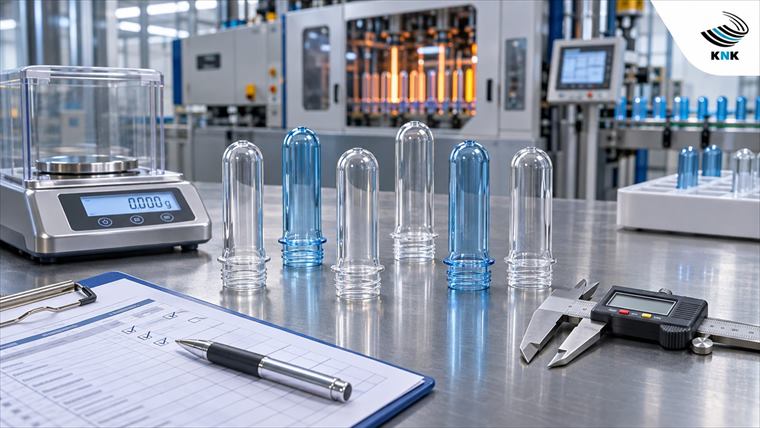
For this reason, specialized closure quality evaluation includes dimensional inspection, mechanical testing, and application-specific performance assessments.
Dimensional Inspection and Manufacturing Consistency
One of the first stages of quality control involves verifying closure dimensions against approved technical drawings.
Features such as internal diameter, height, thread geometry, and critical component dimensions are inspected.
The objective is to ensure that manufactured components remain within defined dimensional tolerances.
Dimensional consistency is particularly important in high-volume manufacturing because significant variations between closures can affect capping machine performance and the quality of the final connection.
Application Torque and Removal Torque Testing
Torque is one of the most important parameters for evaluating threaded closure performance.
Application Torque refers to the torque applied when installing the closure onto a bottle.
Removal Torque refers to the torque required to initiate closure opening under specified test conditions.
These values are not necessarily identical because closure behavior can be influenced by factors such as thread design, material properties, the time elapsed after capping, and environmental conditions.
ASTM D2063/D2063M is one of the relevant standards associated with evaluating torque retention in packaging systems using continuous-thread closures.
However, appropriate torque limits must be established for the actual closure, bottle, and production line conditions.
Leakage and Sealing Performance Testing
Leak testing is used to evaluate the ability of the bottle and closure connection to prevent unintended product leakage.
Testing methods may vary depending on the product type, packaging design, and expected operating conditions.
In certain applications, packages are evaluated under specified pressure conditions or orientations to identify potential sealing defects.
The results reflect the performance of the complete bottle and closure system and cannot necessarily be attributed to one component alone.
Acceptance criteria must also be defined according to product requirements and actual storage and distribution conditions.
Visual Inspection and Component Integrity
Alongside performance testing, visual inspection is an important part of quality evaluation.
The presence of flash, deformation, thread defects, color inconsistencies, or damage to critical features may indicate manufacturing process problems.
For products incorporating tamper-evident bands, these features must also be inspected according to the approved design.
Combining visual inspection, dimensional measurements, and performance testing provides a more comprehensive assessment of closure quality.
Why Is Compatibility Between Bottle Caps, PET Preforms, and PET Bottles Important?
In packaging manufacturing, PET preforms, bottles, and closures each have their own technical characteristics. However, their final performance is interconnected.
A PET preform is transformed into a bottle through the stretch blow molding process. In conventional stretch blow molding, the preform's neck finish retains its predefined geometry, and the closure connects to this section.
The bottle cap must therefore be compatible with the neck finish specifications to establish proper mechanical engagement and sealing.
Although these components may be manufactured independently, they must be selected with consideration for the performance of the complete packaging system.
For example, changing the closure supplier without verifying neck finish specifications, or replacing a preform with a different design, may affect capping machine operation and packaging sealing performance.
Under such conditions, even if each component meets its individual quality requirements, the complete packaging system may fail to achieve the desired performance.
This demonstrates that packaging quality is not simply the result of individual component quality; it also depends on their engineering compatibility.
From PET Preform Manufacturing to Bottle Caps: The Shared Development of Khosh Noosh Kavir and Piroozan Sanat Arian Kavir
The development of this industrial group began in 2006 (1385 in the Iranian calendar) under the Khosh Noosh brand, with a specialized focus on PET preform manufacturing.
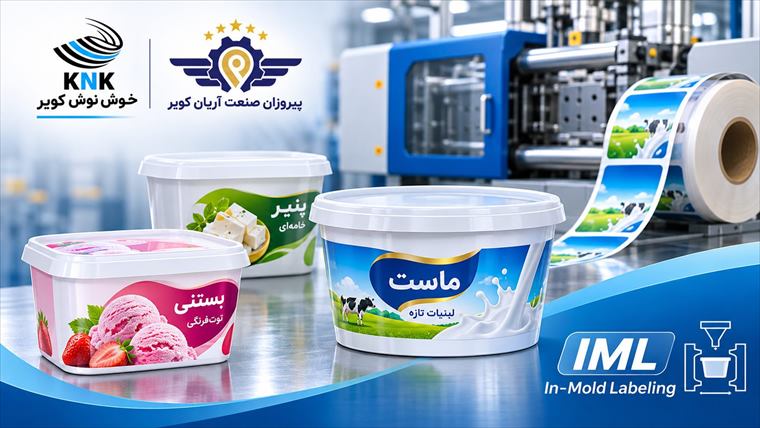
As operations expanded and the group responded to the evolving requirements of the packaging industry, Piroozan Sanat Arian Kavir joined the group's activities in 2021 (1400 in the Iranian calendar), focusing on bottle cap manufacturing and packaging products using In-Mold Labeling (IML) technology.
Today, Khosh Noosh Kavir and Piroozan Sanat Arian Kavir operate as two brands within the same industrial group under shared management, covering complementary segments of the packaging production chain.
Khosh Noosh Kavir specializes in PET preform and bottle manufacturing, supplying products for the food, beverage, and dairy industries.
Alongside these activities, Piroozan Sanat Arian Kavir has expanded the group's product portfolio through bottle cap manufacturing and IML packaging.
This structure creates opportunities for a better understanding of manufacturers' requirements and a more integrated approach to different packaging components.
Industrial Experience and a Quality-Oriented Approach in Yazd Province
The operations of Khosh Noosh Kavir and Piroozan Sanat Arian Kavir in Yazd Province, Iran, are built upon industrial manufacturing experience, attention to raw material quality, and the development of products for the packaging industry.
Throughout this process, understanding customer requirements, controlling manufacturing processes, and continuously improving quality have remained important priorities.
According to information published by Khosh Noosh Kavir, the company has obtained certification for the management system standards ISO 9001, ISO 14001, and ISO 45001.
These standards address quality management systems, environmental management systems, and occupational health and safety management systems, respectively.
Implementing such systems can provide a structured framework for managing organizational activities. However, the technical conformity of each product must be evaluated independently according to its specifications and relevant testing requirements.
The shared development journey of Khosh Noosh Kavir and Piroozan Sanat demonstrates a progression from manufacturing an individual packaging component toward developing a more diversified portfolio of products required by the industry.
What Should Manufacturers Consider When Purchasing Bottle Caps in Bulk?
Purchasing bottle caps in bulk is a decision that can affect not only the unit price but also production line stability, product quality, and operating costs.
For this reason, supplier selection should be based on the technical suitability of the product for the manufacturer's requirements.
Before placing an order, it is advisable to establish a clear set of technical and operational specifications to enable a more accurate evaluation of the proposed closure.
The most important information required for a product inquiry includes:
- Bottle and neck finish specifications: Nominal diameter, applicable standard, thread geometry, and technical drawings of the bottle neck.
- Packaged product characteristics: Beverage or food product type, filling conditions, processing temperature, and storage requirements.
- Capping line specifications: Equipment type, production speed, application torque conditions, and machinery characteristics.
- Quality and purchasing requirements: Closure material, required color, sealing structure, safety features, order quantity, and delivery conditions.
Why Should Bottle Cap Price Not Be the Only Purchasing Criterion?
At first glance, the unit price of a bottle cap may appear to be one of the most important criteria for comparing suppliers.
However, the actual cost of using a closure depends on additional factors.
If the selected cap is incompatible with the bottle neck or production equipment, it may increase line stoppages, waste caused by improper capping, or quality problems in finished products.
Manufacturing consistency, dimensional stability, and reliable supply availability can also influence bulk purchasing decisions.
Therefore, the economic evaluation of bottle caps should be conducted alongside quality assessments and technical compatibility verification.
Why Is Sample Testing Important Before Bulk Orders?
One effective method of reducing the risks associated with inappropriate product selection is to evaluate closure samples under actual production line conditions.
This process makes it possible to assess closure seating on the bottle neck, capping machine performance, removal torque, and sealing effectiveness.
Evaluating packaging performance after filling and under defined storage conditions can also provide valuable information about product compatibility.
Sample testing is particularly important when a manufacturer plans to change closure suppliers, modify bottle design, or adopt a new neck finish family.
The results can provide a more reliable technical and commercial basis for bulk purchasing decisions.
Frequently Asked Questions About Bottle Cap Manufacturing
Are All 38 mm Bottle Caps the Same?
No. A nominal diameter of 38 mm does not mean that all closures share identical technical specifications. Thread type, internal geometry, height, and sealing structure may vary between designs. To verify compatibility, the technical specifications of both the cap and bottle neck must be examined.
What Is the Best Raw Material for Manufacturing Bottle Caps?
The answer depends on the product type and packaging requirements. Polyethylene and grades such as HDPE are commonly used materials, but the final selection must be based on mechanical properties, closure design, processing conditions, and food-contact requirements.
Are PE Bottle Caps Suitable for Milk and Fruit Juice Packaging?
Polyethylene closures can be suitable for certain dairy products and fruit juices, provided that the material grade, closure design, filling conditions, and technical and hygienic requirements are compatible with the intended application.
Can a Closure Designed for Cold Filling Be Used for Hot Filling?
Not necessarily. Hot filling can expose both the closure and bottle to different thermal and mechanical conditions. A closure should only be used in such a process after its technical suitability and performance under actual operating conditions have been verified.
How Can Bottle Cap Sealing Quality Be Verified?
Dimensional compatibility checks, capping torque control, leakage testing, and sample evaluation under actual production conditions are among the most important methods. Final performance must be assessed for the complete bottle and closure system.
Conclusion: Bottle Cap Quality Is an Essential Part of Packaging Quality
Despite their small size, plastic bottle caps are among the components that significantly influence the performance of food and beverage packaging.
Raw material selection, thread design, sealing structure, manufacturing precision, and compatibility with the bottle neck all contribute to the quality of the finished closure.
For 38 mm closures, nominal diameter alone is not sufficient. Proper selection must be based on technical specifications and actual product requirements.
Furthermore, closure quality delivers its greatest value when it is coordinated with bottle design, PET preform characteristics, and production line settings.
In the packaging industry, a high-quality bottle cap is more than a component used to close a bottle; it is part of an engineered system designed to preserve the quality, safety, and performance of the finished product.
Through their activities in PET preform manufacturing, PET bottle production, and bottle cap manufacturing, Khosh Noosh Kavir and Piroozan Sanat Arian Kavir cover complementary needs within the packaging industry.
Their cooperation as two brands under shared management reflects a development journey that began with PET preform manufacturing and has continued through the expansion of packaging products.
Request Technical Consultation and a Quotation for 38 mm Bottle Caps
If you manufacture bottled water, milk, fruit juices, or other beverages and require plastic bottle caps for your production line, choosing the right product should begin with a careful evaluation of technical specifications.
For information about 38 mm PE bottle caps, compatibility assessment with your bottles, and bulk supply inquiries, contact the sales team at Piroozan Sanat Arian Kavir.
You can also explore the product section of the Khosh Noosh Kavir website to learn more about its PET preforms and bottles.
Khosh Noosh Kavir and Piroozan Sanat Arian Kavir — Shared Expertise in Developing Packaging Solutions.