Why Do PET Bottles Deform? Causes and Prevention
2026/11/21
Learn why PET bottles deform under pressure, heat, and storage conditions. Explore the role of preform design, wall thickness, and quality testing in improving bottle strength and dimensional stability.
PET bottles play a vital role in the beverage and food packaging industries due to their lightweight structure, transparency, excellent formability, and favorable mechanical properties. However, one of the challenges faced by manufacturers and quality control departments is bottle deformation during production, filling, transportation, or storage.
Sidewall collapse, base deformation, reduced standing stability, and dimensional changes under thermal exposure are among the issues that can affect both the appearance and functional performance of PET packaging.
But why might a PET bottle that appears perfectly acceptable immediately after production become deformed at a later stage? Is the problem always related to raw material quality, or can preform design, stretch blow molding conditions, and environmental factors also contribute?
Answering these questions requires an understanding of the mechanical and thermal behavior of PET, alongside bottle design and real-world operating conditions.
What Is PET Bottle Deformation and How Does It Occur?
PET bottle deformation refers to changes in a bottle's original shape or dimensions caused by mechanical forces, pressure differences, temperature variations, or a combination of these factors.
These changes may be temporary or permanent. In temporary deformation, the bottle can largely recover its original shape once the applied load is removed. In permanent deformation, the bottle's structure changes to the extent that its original geometry cannot be fully restored.
For example, a bottle exposed to excessive loads due to improper stacking may experience deformation in its sidewalls or shoulder area. In other situations, a reduction in internal pressure relative to atmospheric pressure may cause the bottle walls to collapse inward.
Similarly, exposure to elevated temperatures or prolonged storage under unsuitable conditions can result in dimensional changes.
Importantly, these forms of deformation do not necessarily share the same root cause. Accurate troubleshooting requires identifying both the type of deformation and the conditions under which it occurs.
How Do Internal and External Pressure Affect PET Bottle Strength?
One of the key factors influencing the dimensional stability of PET bottles is the pressure difference between the inside of the bottle and its surrounding environment.
A bottle's response to pressure depends on several factors, including body geometry, wall thickness, base design, material properties, and manufacturing conditions.
Internal Pressure in Carbonated Beverage Bottles
PET bottles used for carbonated beverages must withstand the internal pressure generated by dissolved carbon dioxide under the product's specified operating and storage conditions.
Increasing internal pressure generates stress within the bottle walls. If the bottle design, wall thickness distribution, or mechanical properties are not appropriate for the expected pressure, the risk of undesirable deformation increases.
In these applications, bottle base geometry is particularly important. Multi-footed or petaloid base designs are commonly used for carbonated beverage bottles and can help manage stresses caused by internal pressure.
However, base geometry alone does not determine a bottle's pressure resistance. Overall performance must be evaluated according to the complete container design, manufacturing conditions, and relevant testing requirements.
Negative Pressure and PET Bottle Paneling
Under certain conditions, the pressure inside a bottle may fall below the surrounding atmospheric pressure. This condition, known as negative internal pressure or partial vacuum, can cause the bottle walls to collapse inward.
A common example occurs in products processed through hot filling. As the product cools after filling and capping, liquid volume contraction and changes in the headspace can create negative pressure inside the bottle.
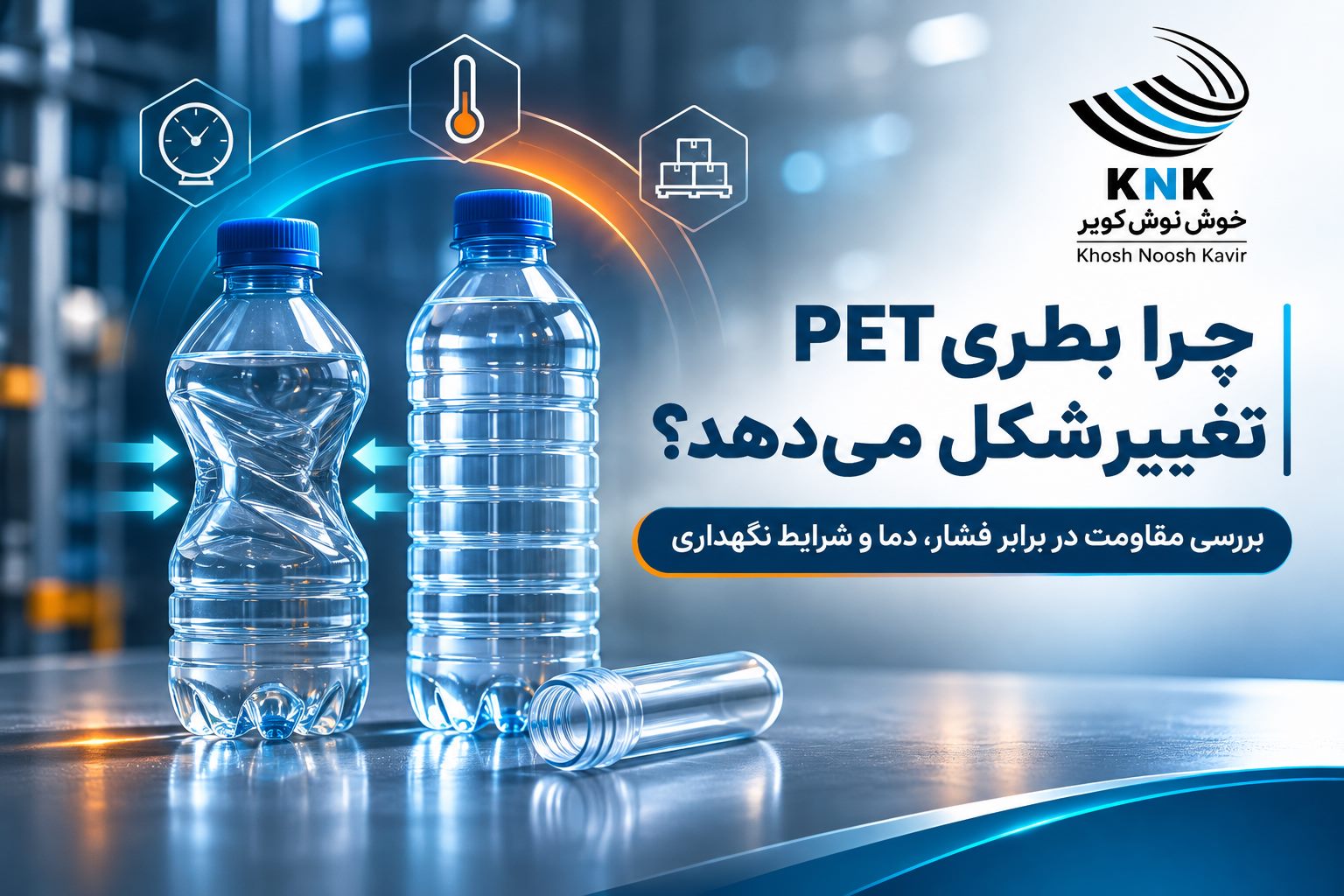
If the bottle has not been designed to withstand or accommodate this pressure differential, parts of its sidewall may deform inward. In the packaging industry, this phenomenon is commonly referred to as paneling.
To manage this effect, some hot-fill PET bottles incorporate specially engineered vacuum panels. These panels are designed to accommodate controlled deformation in designated areas, helping preserve the bottle's overall appearance and functionality.
Therefore, inward deformation does not necessarily indicate poor raw material quality. It may instead result from pressure differences or a bottle design that is incompatible with the filling process.
How Does Temperature Cause PET Bottle Deformation?
Temperature is a critical factor in the mechanical behavior of PET. Like many polymers, PET exhibits properties that depend on both temperature and the duration of applied loads.
As temperature increases, the material's resistance to certain types of mechanical deformation may decrease, while the likelihood of time-dependent deformation can increase.
The Role of PET Glass Transition Temperature
PET has a glass transition temperature, commonly referred to as Tg. For amorphous PET, this temperature is typically reported within an approximate range of 70–80°C, although the exact value depends on material structure, measurement conditions, and thermal history.
As PET approaches this temperature range, the mobility of polymer chain segments increases, potentially resulting in significant changes in mechanical behavior.
However, this does not mean that all PET bottles remain dimensionally stable below a particular temperature or deform at a single, fixed temperature.
The thermal performance of a finished bottle also depends on molecular orientation, crystallinity, manufacturing history, container design, exposure duration, and applied loads.
Consequently, a finished PET bottle's heat resistance cannot be determined solely from the glass transition temperature of the original material.
Why Are Conventional PET Bottles Unsuitable for Hot Filling?
PET bottles designed for cold-fill applications are not necessarily capable of maintaining their dimensions and required performance during hot filling.
At elevated temperatures, the oriented molecular structure developed during bottle manufacturing may undergo relaxation and shrinkage. This can lead to dimensional changes or reduced geometric stability.
Hot-fill applications generally require specialized bottle designs and manufacturing processes that provide improved thermal resistance.
One such process is heat setting, which uses controlled thermal conditions during bottle manufacturing to improve dimensional stability for the intended application.
Therefore, selecting PET bottles for products such as fruit juices and other beverages requiring thermal processing must take into account the actual filling temperature, cooling conditions, and packaging requirements.
How Does PET Preform Quality Affect Bottle Strength and Stability?
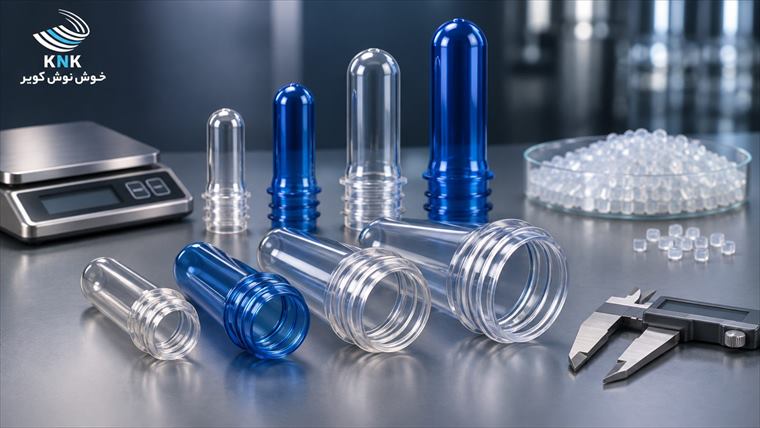
A PET preform is an injection-molded intermediate product that is transformed into a finished bottle through a stretching and blowing process. Consequently, preform specifications can significantly influence the quality and mechanical behavior of the final bottle.
Preform weight, geometry, wall thickness, material characteristics, and manufacturing consistency are among the variables that must be selected according to the bottle's intended design and application.
However, preform quality alone does not guarantee satisfactory bottle performance. Stretch blow molding conditions also play a decisive role in the final bottle's structure and material distribution.
Wall Thickness Distribution: More Important Than Weight Alone
One of the most important considerations in PET bottle design is how material is distributed throughout the container.
Two bottles with identical weights may exhibit different mechanical performance because their wall thickness is distributed differently.
For example, the shoulder, body, and base of a bottle experience different loading conditions. If a critical area has insufficient wall thickness, that region may become the starting point for deformation.
Conversely, increasing wall thickness throughout the entire bottle is not necessarily the best solution. Doing so may increase raw material consumption and overall bottle weight without delivering a proportional improvement in performance.
The objective of engineering design is to achieve an appropriate material distribution based on bottle geometry and actual loading requirements.
How Stretch Blow Molding Settings Influence Bottle Strength
During the PET stretch blow molding process, a preform is heated under controlled conditions and transformed into its final bottle shape through axial stretching and pressurized air.
Preform temperature, heat distribution along the preform, stretching sequence, blowing pressure, and mold conditions can all influence how the material deforms during production.
If the heating profile is unsuitable, certain areas of the preform may become excessively stretched while others experience insufficient stretching. This can lead to undesirable wall thickness distribution in the finished bottle.
Furthermore, biaxial stretching influences the molecular orientation of PET, which contributes significantly to the mechanical properties of the bottle.
Achieving a mechanically reliable PET bottle therefore requires coordination between preform design, material characteristics, mold geometry, and stretch blow molding parameters.
Why Do Some PET Bottles Deform During Storage and Transportation?
Storage and transportation conditions can cause bottles that initially appear satisfactory to develop deformation at later stages.
One important factor is mechanical loading during stacking and handling.
When bottles are packed into multipacks or arranged on pallets, some of the weight from upper layers may be transferred to bottles positioned below.
The magnitude and distribution of this load depend on the packaging configuration, bottle design, pallet arrangement, and the structural contribution of packaging components such as cartons, trays, and wrapping films.
If the axial compression load exceeds the load-bearing capacity of the bottle and its packaging system, buckling, indentation, or other forms of deformation may occur.
Top Load Resistance and Axial Compression Strength
Top load resistance is an important performance indicator used to evaluate a bottle's ability to withstand compressive forces applied along its vertical axis.
During a top load test, a bottle is subjected to a specified compressive load while its force-deformation behavior is measured.
This test can provide useful information about structural strength and allow comparisons between different bottle designs.
However, test results depend on sample condition, testing procedures, and bottle characteristics. The compression resistance of an empty bottle is not necessarily equivalent to the performance of a filled and packaged bottle.
For this reason, acceptance criteria should be established according to the product's actual application, production conditions, and distribution requirements.
The Effects of Heat and Storage Duration
In warm environments, the mechanical behavior of PET may differ from its performance under normal temperature conditions.
When a bottle is simultaneously exposed to elevated temperatures and mechanical loads, the likelihood of gradual deformation may increase. This behavior is associated with the time-dependent properties of polymers, including creep.
Creep refers to the gradual deformation of a material under a sustained load over time.
Consequently, a bottle may demonstrate satisfactory performance during a short-term mechanical test but behave differently under prolonged storage and unfavorable loading conditions.
Controlling warehouse temperatures, minimizing unnecessary exposure to heat sources, and following appropriate stacking requirements can therefore help maintain bottle stability.
Does PET Bottle Lightweighting Increase the Risk of Deformation?
Lightweighting is an important strategy in the PET packaging industry, aimed at reducing raw material consumption and optimizing packaging weight.
However, reducing bottle weight without appropriate engineering evaluation may negatively affect mechanical performance.
If bottle weight is reduced without adjusting the geometry and wall thickness distribution, the container's ability to withstand compressive loads or pressure differentials may decrease.
On the other hand, properly engineered lightweighting does not necessarily result in a weaker bottle.
By optimizing bottle geometry, reinforcing critical regions, controlling material distribution, and precisely adjusting stretch blow molding conditions, manufacturers can reduce bottle weight in certain applications while maintaining the required performance standards.
Therefore, the success of a lightweighting project should not be measured solely by the amount of material saved. Maintaining reliable bottle performance under actual operating conditions is equally important.
How Is PET Bottle Resistance to Deformation Evaluated?
PET bottle performance should be evaluated according to the intended product, filling process, storage conditions, and transportation requirements.
No single test can fully characterize all the mechanical and thermal properties of a bottle. For this reason, specialized quality control systems rely on a combination of tests and dimensional measurements.
Axial Compression Testing
Top load testing is used to evaluate the behavior of a bottle under axial compressive forces.
During the test, the applied force and resulting deformation are recorded to assess the bottle's structural response under specified conditions.
ASTM D2659 is one of the relevant reference standards associated with evaluating the axial compression characteristics of blow-molded thermoplastic containers.
The testing procedure, whether the bottle is filled or empty, and the acceptance criteria must be appropriate for the intended application.
Internal Pressure Resistance Testing
For bottles intended for carbonated beverages, evaluating internal pressure resistance is particularly important.
This evaluation may include examining dimensional changes, monitoring bottle behavior under pressure, and, when necessary, determining burst pressure under controlled test conditions.
There is no single universally acceptable pressure value for all PET bottles. Required pressure resistance must be established according to beverage type, product temperature, packaging design, and relevant technical specifications.
Thermal and Dimensional Stability Testing
These tests evaluate changes in bottle dimensions or volume after exposure to defined thermal conditions.
Their purpose is to assess the bottle's ability to maintain its expected geometry and performance when subjected to temperatures relevant to its actual application.
Test temperatures and exposure durations must be selected based on the product's operating requirements, as cold-fill and hot-fill bottles are subject to different performance expectations.
Wall Thickness Measurement and Geometric Inspection
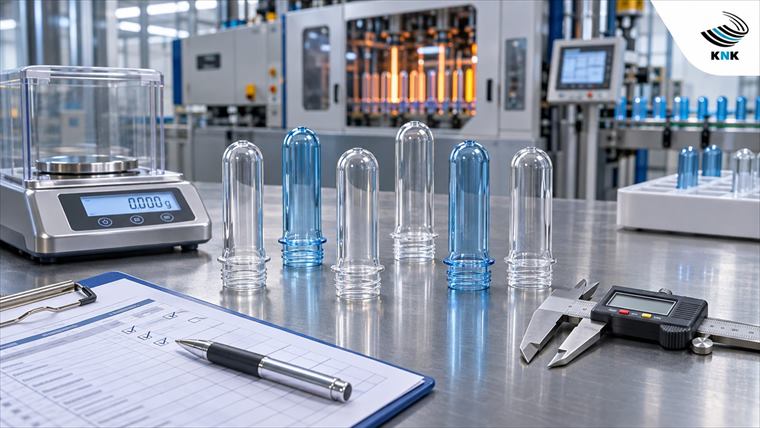
Measuring wall thickness at defined locations can provide valuable information about material distribution and the quality of the stretch blow molding process.
Similarly, dimensional inspection, base geometry assessment, standing stability evaluation, and comparison with the approved bottle design can help identify structural inconsistencies.
Combining these measurements with mechanical testing results provides a more comprehensive understanding of bottle performance.
How Can the Root Cause of PET Bottle Deformation Be Identified?
Effective troubleshooting begins by determining the production or distribution stage at which deformation occurs.
If a bottle is already misshapen immediately after stretch blow molding, the heating profile, wall thickness distribution, preform geometry, and mold conditions should be investigated.
If inward deformation develops after filling and capping, attention should be directed toward internal pressure changes, filling conditions, product temperature, and cooling behavior.
If deformation occurs during transportation or storage, factors such as mechanical loading, pallet stacking arrangements, temperature, storage duration, and bottle structural strength become particularly important.
In each situation, comparing defective bottles with acceptable samples and reviewing recorded process data can help identify the underlying cause.
Relying exclusively on visual appearance may lead to incorrect conclusions because similar deformation patterns can result from different mechanisms.
The Importance of Selecting the Right PET Preform to Prevent Bottle Deformation
Selecting an appropriate PET preform is one of the decisions that can significantly influence the performance of the finished packaging.
A preform whose weight, geometry, material properties, or manufacturing consistency do not match the bottle's actual requirements may make it difficult to achieve the desired wall thickness distribution and mechanical performance.
For this reason, preform selection should not be based solely on weight or neck diameter.
Product type, bottle volume, mold design, stretch blow molding machine specifications, filling conditions, and mechanical performance requirements should all be considered.
At Khosh Noosh Kavir (KNK), the production of PET preforms with various neck finishes, along with different types of PET bottles, forms part of the company's specialized activities in the packaging industry.
Ensuring that preform specifications are compatible with the intended application is an important principle when selecting suitable products for beverage and food packaging production lines.
Ultimately, evaluating preform samples under actual production conditions can provide valuable information about their compatibility with the stretch blow molding process and the performance of the finished bottle.
Conclusion: PET Bottle Strength Depends on Coordinated Design and Manufacturing
PET bottle deformation is not always caused by poor raw material quality or insufficient bottle weight. It may result from internal and external pressure differences, thermal exposure, mechanical loading, bottle geometry, improper wall thickness distribution, or manufacturing process parameters.
In PET bottle manufacturing, consistent product quality is more reliably achieved when preform selection, bottle design, stretch blow molding conditions, and end-use requirements are evaluated as an integrated system.
Appropriate performance testing, combined with controlled storage and transportation conditions, also plays an essential role in minimizing deformation risks and maintaining packaging functionality.
For beverage and food manufacturers, selecting the right PET preform is more than a purchasing decision; it is an integral part of engineering the quality and performance of the finished bottle.
As a manufacturer of PET preforms and bottles, Khosh Noosh Kavir (KNK) offers a range of products designed to address different packaging requirements. Manufacturers seeking to evaluate product specifications or select PET preforms suitable for their intended applications can contact the KNK sales team for further information and consultation.