Why Does Beverage Taste and Quality Change in PET Bottles?
2026/11/24
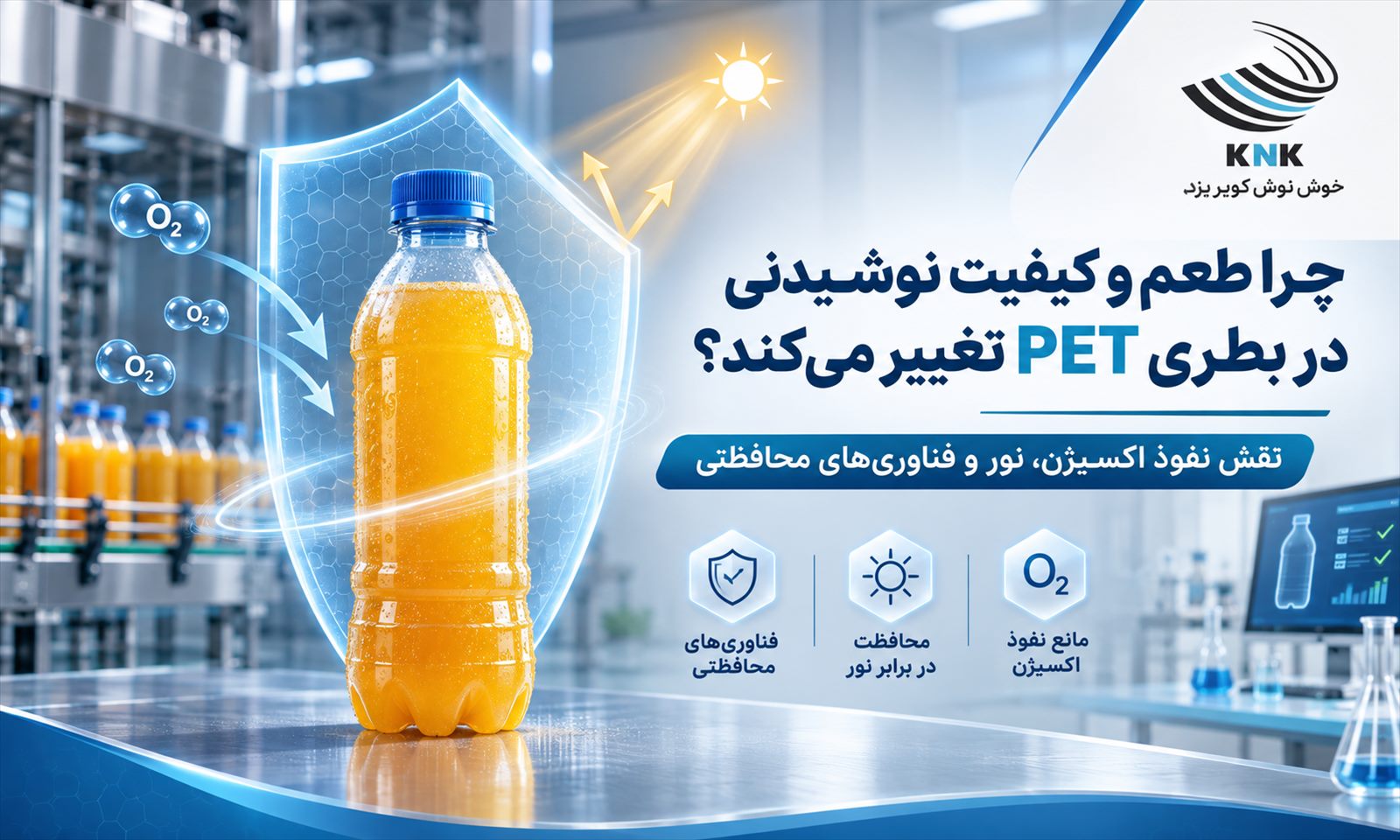
Oxygen permeability, light exposure, and carbon dioxide loss can affect the taste, color, and shelf life of beverages packaged in PET bottles. Discover how barrier technologies, bottle design, and proper PET preform selection contribute to preserving beverage quality.
The Role of Oxygen Permeability, Light, and Barrier Technologies
PET bottles are among the most widely used packaging solutions for beverages due to their lightweight structure, transparency, suitable mechanical strength, and excellent formability. However, preserving beverage quality after production depends on more than product formulation or filling conditions. The type of packaging can also influence the beverage's taste, color, aroma, and shelf life.
In some cases, a beverage meets the desired quality standards immediately after production, but its original characteristics gradually change during storage. Some of these changes may be associated with oxygen ingress, the loss of dissolved gases, light exposure, or unsuitable storage conditions.
Although PET offers favorable properties for beverage packaging, it does not provide an entirely impermeable barrier against gases and light.
In this article, we examine how oxygen permeability in PET bottles affects beverage quality, how light exposure influences certain products, and how barrier technologies can help preserve product characteristics.
What Is PET Bottle Permeability, and Why Does It Matter?
Permeability refers to the ability of gas molecules or certain substances to pass through a material's structure.
In PET bottles, gas molecules can gradually migrate through the polymer structure. This process depends on the material's characteristics, bottle wall thickness, temperature, differences in gas partial pressure, and storage duration.
Consequently, even properly sealed bottles may experience limited gas transmission over time.
However, PET has permeability characteristics that make it suitable for many common beverage packaging applications. The issue becomes more significant when the packaged beverage is particularly sensitive to oxygen or requires an extended shelf life.
Under these conditions, bottle selection should be based on the product's characteristics and the expected performance of the packaging system.
How Oxygen Affects Beverage Taste and Color
Oxygen is one of the factors that can contribute to oxidation reactions involving compounds found in beverages.
In certain fruit juices and beverages containing sensitive ingredients, oxidation may cause changes in aroma, taste, color, or the concentration of specific nutritional compounds.
For example, vitamin C and certain naturally occurring compounds responsible for color and aroma may be sensitive to oxidative conditions.
However, not all quality changes caused by oxygen originate from oxygen transmission through the bottle walls.
Oxygen already dissolved in the beverage during production, air present in the space above the liquid—known as the headspace—and the performance of the closure system can also influence the total amount of oxygen inside the package.
Therefore, evaluating beverage quality requires consideration of the entire manufacturing, filling, and packaging process.
How Does Light Exposure Affect Beverage Quality in PET Bottles?
Transparency is one of the desirable characteristics of PET bottles because it allows consumers to see the product inside.
However, this same characteristic can present challenges for beverages that are sensitive to light.
Certain wavelengths of light passing through the packaging may contribute to chemical reactions involving light-sensitive compounds. The nature and intensity of these reactions depend on the wavelength, product composition, and duration of exposure.
In some beverages, exposure to light may cause undesirable changes in aroma, color, or other sensory properties.
This issue is particularly important for products containing pigments, vitamins, or other light-sensitive ingredients.
Do Colored PET Bottles Provide Better Protection?
Using pigments or light-filtering additives can be one approach to reducing product exposure to certain wavelengths of light.
However, the color of a bottle alone does not guarantee sufficient protection.
Actual performance depends on the type and concentration of pigments or additives, bottle wall thickness, and the spectrum of light transmitted through the material.
For this reason, choosing transparent, colored, or specially engineered light-protective bottles should be based on the beverage's sensitivity.
Storage conditions and the way products are displayed in retail environments can also influence light exposure and quality preservation.
Why Is Carbon Dioxide Retention Important in Carbonated Beverages?
For carbonated beverages, permeability is not limited to oxygen ingress. Retaining dissolved carbon dioxide is also extremely important.
Carbon dioxide is one of the factors responsible for the sensory characteristics and carbonation level of a beverage.
During storage, some of this gas may gradually pass through the bottle walls. The rate of transmission depends on material properties, bottle design, temperature, and the difference in gas partial pressure.
A reduction in carbon dioxide content can influence the perceived carbonation and overall drinking experience.
How Bottle Size and Design Affect Carbonation Retention
The ratio of bottle surface area to product volume is one of the factors influencing gas transmission.
Under comparable material and design conditions, smaller bottles generally have a higher surface-area-to-volume ratio. Consequently, they may be more sensitive to relative carbonation losses over time than larger bottles.
Bottle wall thickness and material distribution also influence gas transmission performance.
However, increasing bottle weight is not always the most economical or technically appropriate solution. The objective is to achieve a bottle design suited to the beverage type, required storage period, and performance specifications.
Closure performance and sealing quality must also be evaluated alongside the barrier properties of the bottle walls.
What Are Barrier Technologies in PET Bottles?
In the packaging industry, barrier technologies refer to solutions developed to reduce gas transmission or limit the passage of factors that could affect product quality.
These technologies become particularly important for beverages with greater sensitivity to environmental exposure or specialized storage requirements.
One approach involves using materials or structures designed to reduce gas transmission through the bottle walls. Certain packaging designs incorporate protective layers or coatings for this purpose.
Another approach involves active oxygen-absorbing technologies, commonly known as oxygen scavenging.
These technologies use specially designed materials or components to reduce the amount of oxygen present in or entering the packaging system.
Passive vs. Active Barrier Technologies
In passive barrier technologies, the primary objective is to reduce the rate at which gases pass through the packaging structure.
Active barrier technologies, on the other hand, may go beyond limiting gas transmission by reacting with oxygen and reducing its concentration.
The selection of these technologies should be based on product sensitivity, storage requirements, production costs, and applicable food-contact safety requirements.
The use of specialized layers or additives may also influence manufacturing processes and packaging recyclability. Therefore, both technical and economic evaluations are essential.
Importantly, not all PET bottles require advanced barrier technologies. In many applications, conventional PET can adequately meet the required packaging specifications.
The Role of PET Preforms and Bottle Design in Preserving Beverage Quality
Selecting an appropriate PET preform is an important stage in PET bottle manufacturing.
Preform weight, geometry, raw material characteristics, and manufacturing consistency can influence the stretch blow molding process and the properties of the finished bottle.
During the transformation of a preform into a bottle, wall thickness distribution and the molecular orientation of PET are influenced by the bottle design and manufacturing parameters.
In addition to affecting mechanical strength, these characteristics can also contribute to gas transmission performance.
For example, two bottles with similar weights may exhibit different permeability behavior because of variations in geometry and wall thickness distribution.
Therefore, selecting a PET preform solely based on weight or price is not sufficient for every industrial application.
How Is PET Bottle Barrier Performance Evaluated?
One of the indicators used to assess oxygen transmission is the Oxygen Transmission Rate (OTR).
This parameter describes the amount of oxygen passing through a material or packaging system under specified testing conditions.
For carbonated beverage bottles, carbon dioxide transmission and changes in the beverage's carbonation level during storage can also be evaluated.
For light-sensitive products, measuring light transmission across relevant wavelengths can provide valuable information about the packaging's protective performance.
However, permeability testing alone cannot determine the actual shelf life of a beverage.
A more comprehensive assessment must also consider the properties of the beverage itself, closure performance, filling conditions, and storage stability testing.
The Importance of Selecting the Right PET Bottle for Each Beverage
The packaging requirements of drinking water, fruit juices, and carbonated beverages are not identical.
For certain fruit juices, minimizing exposure to oxygen and light may be particularly important.
In carbonated beverages, carbon dioxide retention is one of the key indicators of packaging performance.
For drinking water, characteristics such as material compatibility, preservation of sensory quality, mechanical strength, and storage conditions are important considerations.
Therefore, selecting appropriate packaging should begin with understanding the product, followed by evaluating bottle material, preform design, manufacturing conditions, and storage requirements.
At Khosh Noosh Kavir (KNK), based in Yazd, Iran, PET preform and bottle manufacturing are among the company's specialized activities in the packaging industry.
Selecting preforms and bottles suited to their intended applications can help beverage manufacturers make more informed technical decisions for their production lines.
However, specialized barrier technologies, proprietary protective coatings, and active oxygen-scavenging materials are separate product characteristics. Their presence in any particular bottle must be verified through the relevant technical specifications.
Conclusion: Preserving Beverage Quality Begins with Appropriate Packaging Selection
Changes in beverage taste, color, and other characteristics during storage may be influenced by various factors, including oxygen, light, temperature, and gas transmission.
PET bottles are widely used in the beverage industry because of their favorable properties. However, their performance should be evaluated according to product sensitivity and actual conditions of use.
Barrier technologies, engineered bottle design, appropriate PET preform selection, and manufacturing process control can all contribute to managing gas transmission and preserving product characteristics.
In the beverage industry, suitable packaging is more than a container for holding a product; it is an important part of the system designed to preserve product quality and shelf life.
Through its specialized activities in PET preform and bottle manufacturing, Khosh Noosh Kavir (KNK) contributes to the packaging supply chain of the beverage industry.
To explore available products, review PET preform and bottle specifications, or receive consultation on selecting packaging suitable for your production line, contact the Khosh Noosh Kavir sales team.