How to Choose the Right PET Preform for Mineral Water, Soft Drinks, Doogh, Milk, and Juice
2026/09/28
Choosing the right PET preform depends on the beverage type, bottle size, neck finish, weight, filling conditions, and production-line requirements. This guide explains suitable PET preform options for mineral water, soft drinks, doogh, milk, and juice, including 28, 30, and 38 mm applications.
Choosing the right packaging is one of the most consequential decisions a beverage producer makes. It affects the quality of the finished product, the performance of the filling line, packaging costs and even the consumer's experience of the brand. At the centre of that decision sits the PET preform, the raw component from which plastic bottles for mineral water, carbonated soft drinks, doogh, milk, juice and other beverages are made.
Not every preform suits every beverage. A mineral water bottle and a carbonated soft drink bottle do not share the same technical requirements, and neither does a milk bottle. Differences in internal pressure, product characteristics, filling conditions, expected shelf life and hygiene requirements make the choice of neck finish, weight and preform structure a decision worth making carefully.
A mineral water preform, for example, has to make a bottle that is light yet strong enough to survive the warehouse and the truck. A soft drink preform has to be matched to the pressure the dissolved gas will exert. In dairy packaging, protection from light and oxygen and compatibility with the filling process move to the front of the list.
This article walks through how the different PET preform families are used across the food and beverage industry, and how to choose the right one based on your product, bottle volume, neck standard and production conditions.
What Is a PET Preform, and Why Does the Choice Matter?
A PET preform is a plastic component shaped rather like a test tube, produced from polyethylene terephthalate. It is formed by injection moulding and then converted into the finished bottle on a blow-moulding machine using heat and compressed air.
One of the preform's most useful properties is that a single component can yield bottles of very different shapes, volumes and technical characteristics. From small mineral water bottles to carbonated drink packaging and dairy containers, each application may call for a preform with its own specification.
Choosing correctly is not a question of how the bottle looks. An unsuitable preform can cause problems during blowing, produce uneven wall thickness, seal poorly at the neck, or fail to hold up through transport and storage. A preform matched to the application, by contrast, supports a good bottle and a filling line that runs predictably.
Several factors have to be weighed at the same time: the type of beverage, the bottle volume, the neck standard, the preform weight, the closure, the blow-moulding machine and the filling conditions.
The important point is that no single weight or neck standard is right for every application. The final choice should follow from the full technical specification of the product and the production line.
Mineral Water Preforms: Making a Bottle That Is Both Light and Strong
Mineral water is one of the largest markets for PET preforms. Producers in this sector need packaging that protects product quality, keeps weight sensible, and performs well through production, warehousing and distribution.
Because still mineral water carries no carbonation, its packaging requirements differ from those of carbonated drinks. Even so, a low bottle weight must not be allowed to reduce resistance to the loads that arise in stacking and transport.
The 30 mm Preform for Mineral Water Packaging
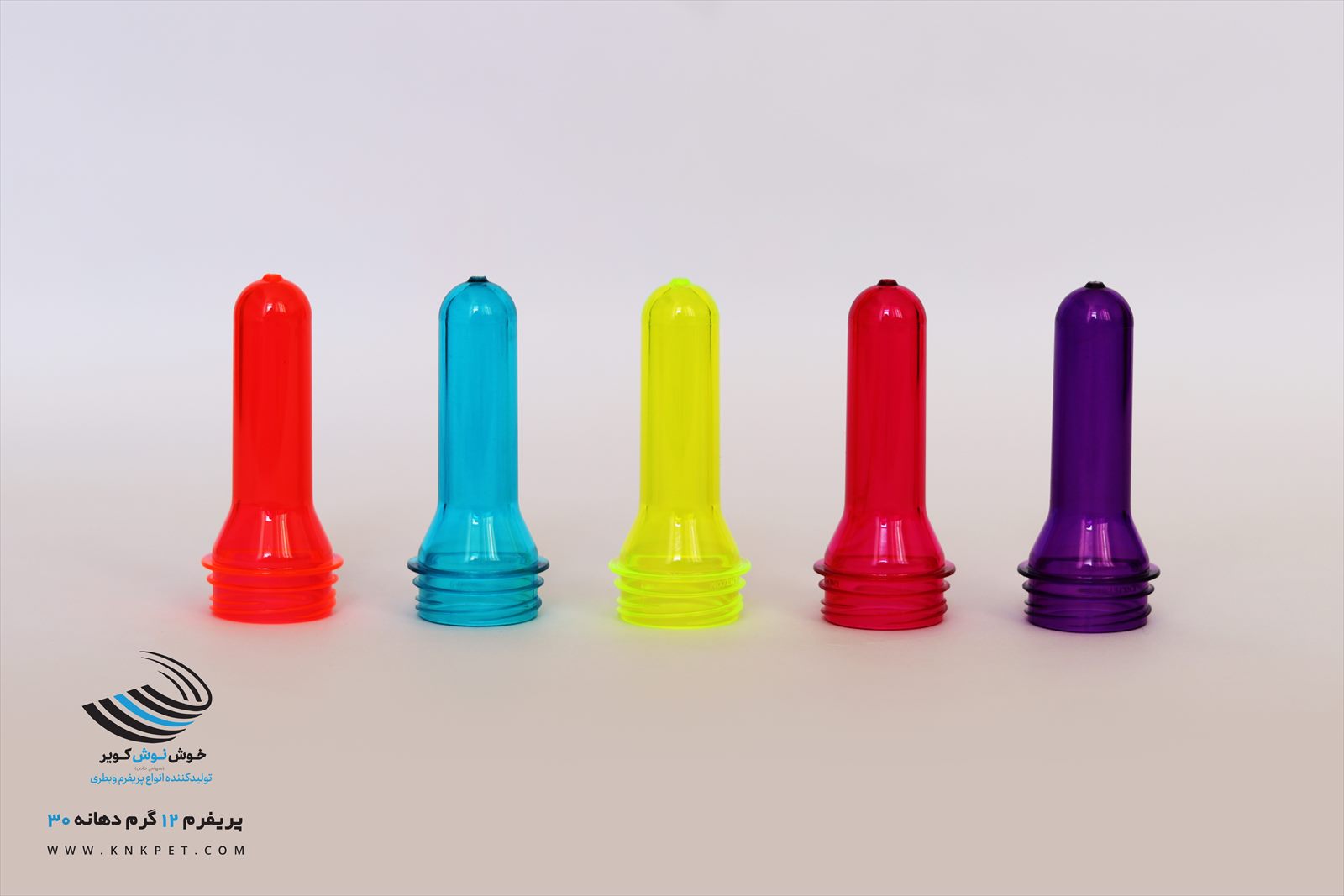
One widely used option in the mineral water industry is the 30 mm neck preform in the 29/25 standard.
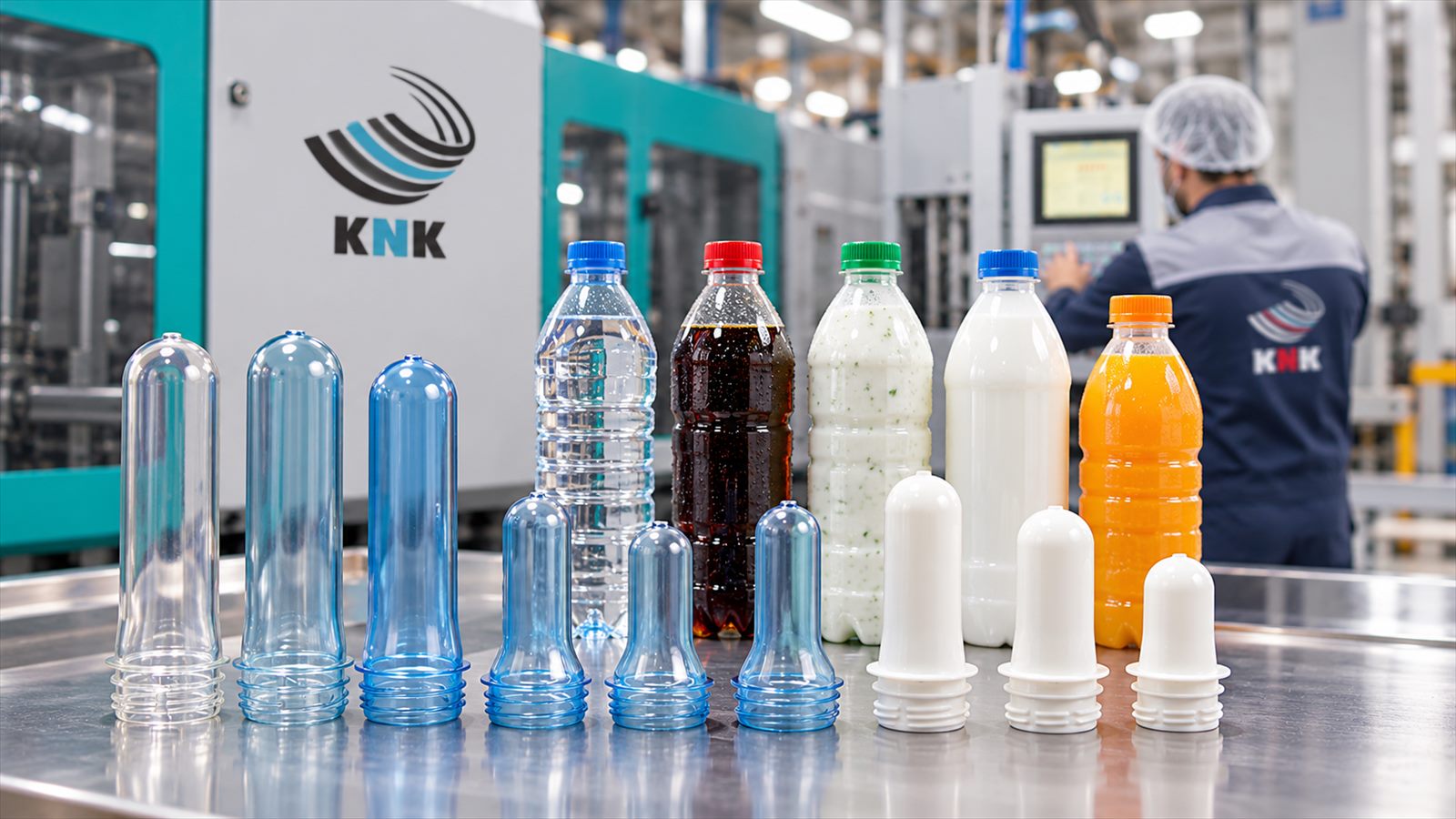
Khosh Noosh Kavir produces this family in a short-neck structure and in a range of weights. The company's 30 mm preforms are offered from 11 to 25 grams, in clear and blue.
Depending on bottle design and the equipment in use, this family can support the production of lightweight mineral water bottles.
What Matters When Buying Mineral Water Preforms?
The first question is the volume of the finished bottle. A preform chosen for a small bottle will not necessarily suit a larger one.
Once the volume is fixed, the preform weight, the bottle geometry, compatibility with the mould and the blow-moulding machine, and the closure standard all need to be checked. Controlling wall thickness distribution matters a great deal too: sections that come out too thin will reduce the strength of the finished bottle.
Clarity, visual quality, dimensional stability and the fit between weight and application also bear on the choice of a mineral water preform.
In industrial production the goal is not simply the lightest possible bottle. It is a balance between weight, strength, production cost and packaging performance.
Soft Drink Preforms: Why Pressure Resistance Comes First
Packaging carbonated soft drinks places different demands on the preform than still mineral water does.
Carbon dioxide dissolved in the beverage raises the internal pressure of the bottle. That pressure varies with storage temperature, carbonation level and transport conditions.
For this reason, a carbonated soft drink bottle must be designed to withstand the internal pressure it will see in service and to seal reliably.
The 28 mm Preform in the PCO 1810 Standard
The 28 mm neck preform in the PCO 1810 standard is among the options used for carbonated beverage bottles.
Khosh Noosh Kavir offers this preform in a normal-neck structure, intended for applications such as carbonated soft drinks and carbonated doogh.
The choice of the PCO 1810 standard should still be made with the closure, the capping equipment and the bottle design in mind. A suitable neck finish on its own does not guarantee that the whole bottle will withstand pressure.
Technical Characteristics That Matter in a Soft Drink Preform
When selecting a soft drink preform, the finished bottle's resistance to internal pressure is the first consideration.
Beyond that, the base design, the wall thickness distribution, the quality of the neck seal and the bottle's ability to retain carbonation all need to be examined.
To be confident of packaging performance, tests covering pressure resistance, gas retention and dimensional stability are necessary.
Weight and price alone, then, are a poor basis for buying a soft drink preform. The technical fit between the preform, the blow-moulding equipment and the characteristics of the beverage does far more to keep problems off the production line.
Doogh Preforms: Choosing for Both Carbonated and Still Products
Doogh is an important product in the Iranian dairy sector and, depending on formulation and process, may be supplied either carbonated or still.
That difference changes which preform and bottle are appropriate.
For carbonated doogh, the bottle's pressure resistance and the quality of the seal matter. For still doogh, filling conditions, shelf life and protection of product quality deserve closer attention instead.
Is a Soft Drink Preform Also Suitable for Doogh?
With a suitable bottle and closure design, the 28 mm PCO 1810 preform can be used for some types of carbonated doogh.
Using a similar preform does not mean that soft drink and doogh packaging face identical requirements. Dairy products differ in their microbiological characteristics, storage conditions and sensitivity to environmental factors, and need to be assessed on their own terms.
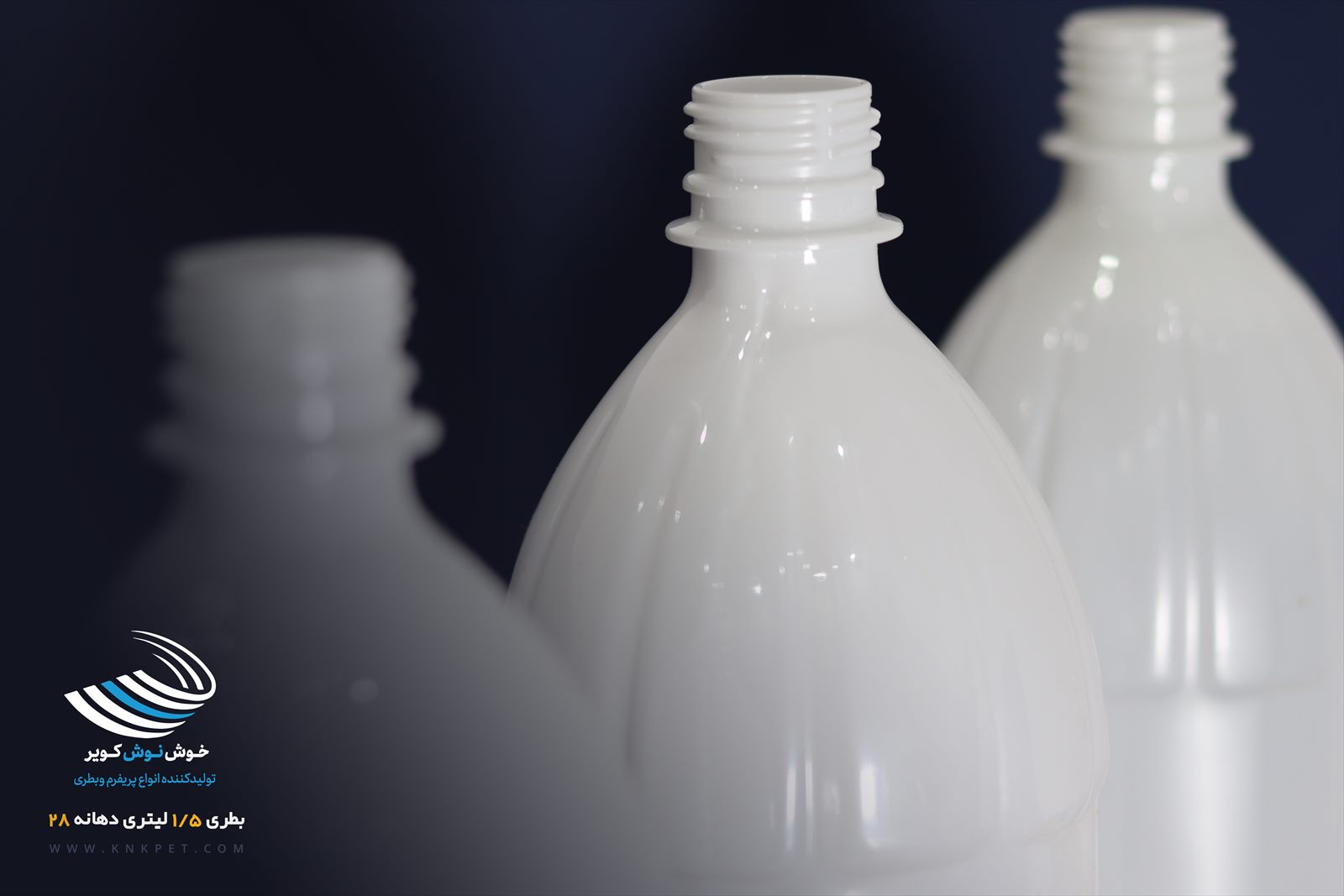
Milky-white preforms may also interest doogh producers, both for appearance and for light transmission. A milky colour by itself, however, does not mean a bottle offers enough protection for every dairy product.
Selecting a doogh preform calls for clarity about the product type, the process conditions, the expected shelf life and the specifications of the packaging equipment.
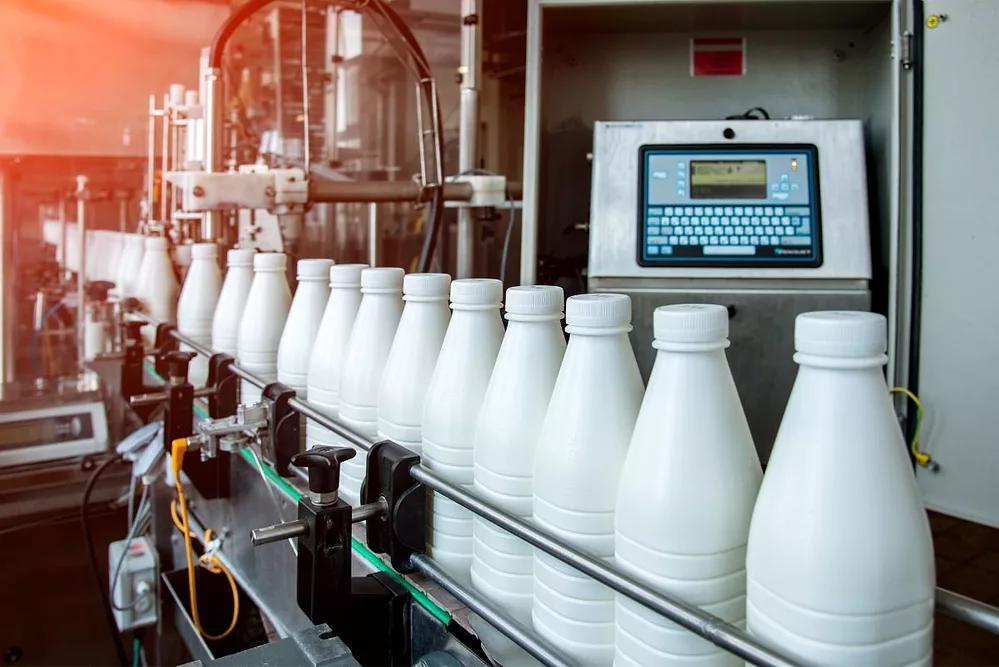
Milk Preforms: Packaging for the Dairy Industry
Milk is a product whose packaging can materially affect quality and shelf life.
Light, oxygen, temperature and the hygiene of production and filling are all factors that belong in the design of milk packaging.
PET bottles allow dairy producers to offer their products in a variety of volumes and shapes. Which bottle suits pasteurised milk, UHT milk or another dairy product still depends on the process and storage conditions.
The 38 mm Preform for Milk Bottles
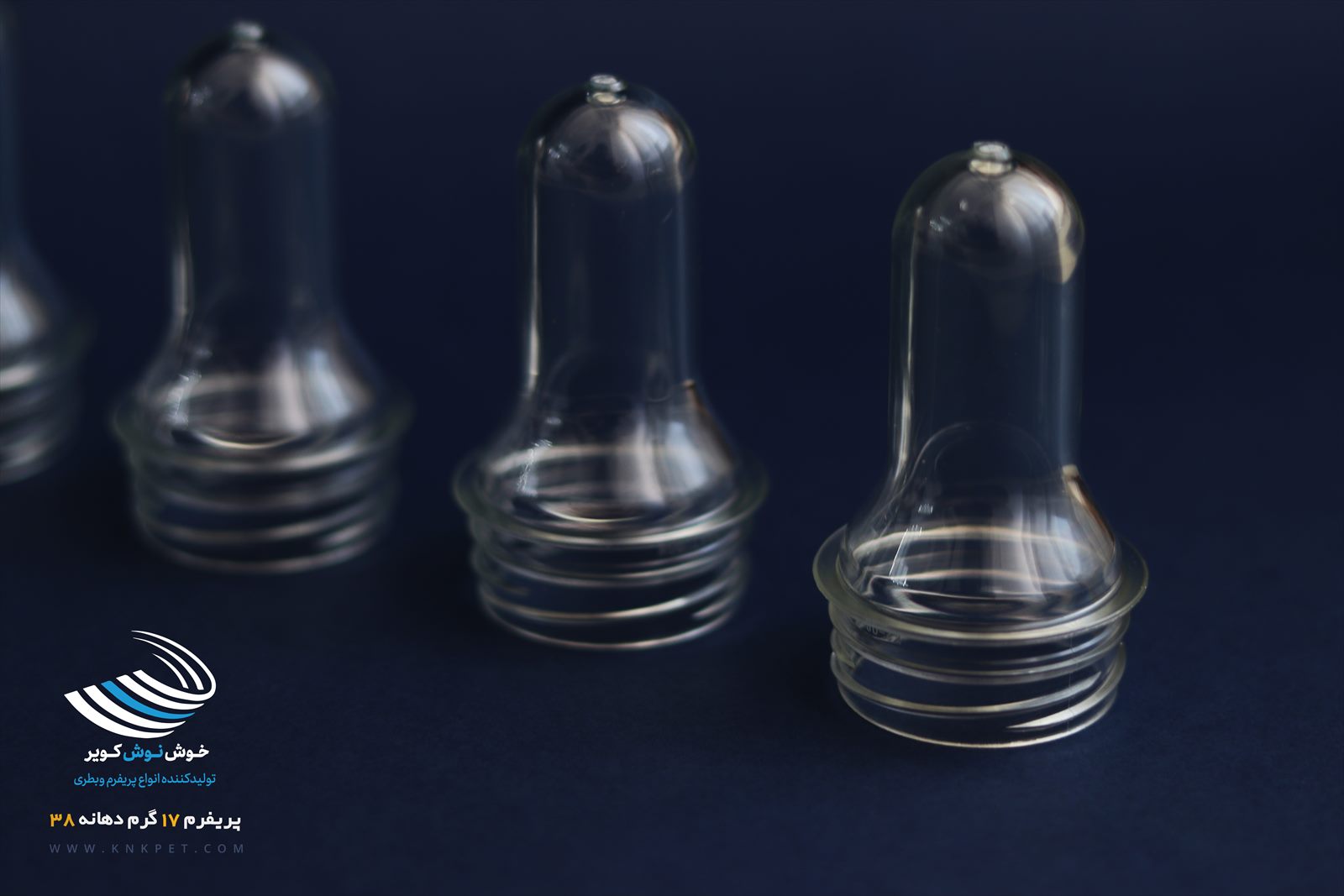
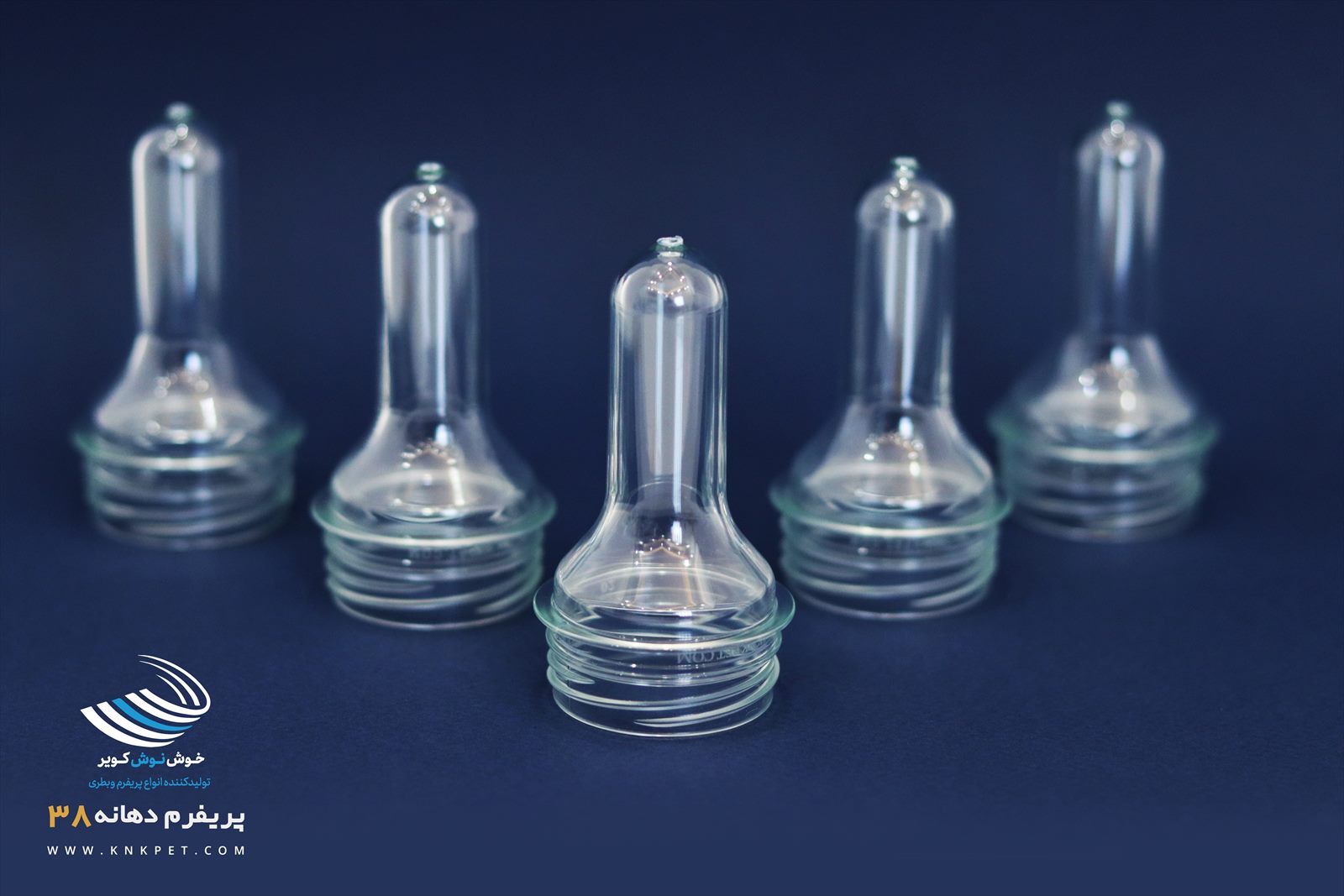
The 38 mm neck preform in the 3-start standard is one of Khosh Noosh Kavir's products for milk and juice packaging.
This family is produced in a short-neck structure in weights from 14 to 30 grams, and is offered in milky white and clear.
Matched to the bottle design and the filling equipment, a 38 mm neck can serve specific categories of dairy packaging.
Is a Milky-White Preform Better for Milk?
The answer depends on the product's characteristics and its storage requirements.
In some dairy applications, opaque bottles and structures that shield the contents from light and oxygen help preserve quality.
The protective performance of a bottle still has to be judged on the material, the permitted additives, the wall thickness, the closure and the relevant shelf-life testing.
The preform chosen for milk also has to suit the filling process, the hygiene requirements and the conditions of the distribution chain.
It is therefore worth defining the packaging characteristics you need, in light of the finished product, before placing a bulk order for milk preforms.
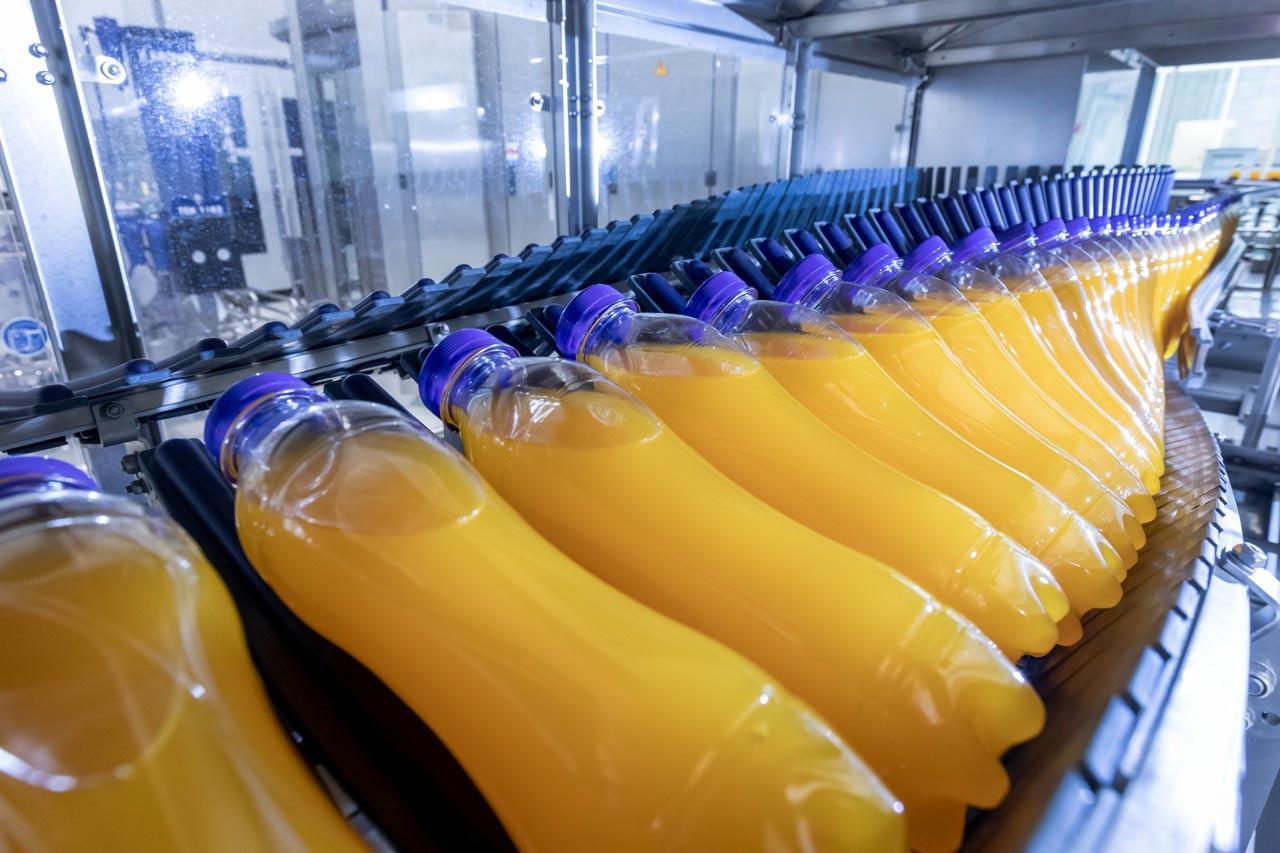
Juice Preforms: The Difference Between Cold and Hot Filling
Juices form a varied group of products, differing in composition, acidity, sensitivity to oxygen and production process.
No single preform can be declared suitable for every juice without reviewing the technical specification.
One of the most important criteria in selecting a juice preform is the filling condition.
Juice Preforms for Cold Filling
Where the product is filled at low or ambient temperature, the preform should be selected with the bottle shape, the closure, the hygiene requirements, the barrier characteristics of the packaging and the expected shelf life in view.
The 38 mm neck preform in the 3-start standard is one of the options in the Khosh Noosh Kavir range for juice packaging.
This choice should still be matched to the specifications of the production line and the storage conditions of the juice.
Juice Preforms for Hot Filling
On some juice lines the product enters the bottle at high temperature. In those conditions an ordinary preform and bottle may not be appropriate.
Hot filling requires a heat-resistant bottle, a design that accommodates volume change, and a suitable neck structure. These applications call for a bottle design and production process built for hot filling.
Neck diameter or preform weight alone, therefore, cannot tell you whether a preform is suitable for hot-filled juice.
If your line uses hot filling, the heat resistance of the finished bottle and the compatibility of the preform with the process should be confirmed explicitly before ordering.
Five Criteria for Choosing the Right Preform in Food and Beverage
With the applications of the different preform families in mind, it is worth setting out the criteria that make the choice easier.
Beverage Type and Storage Conditions
The first question is what product will go into the bottle.
Mineral water, soft drinks, doogh, milk and juice have different technical profiles. Some need pressure resistance; others are more sensitive to light, oxygen or ambient conditions and need protection instead.
The filling temperature, the storage method and the expected shelf life should all be settled at the outset.
Bottle Volume and Preform Weight
The right preform weight depends on the bottle volume, the mould design, the application and the conditions on the production line.
More weight is not automatically a better choice. Cutting weight too far, on the other hand, can compromise the strength of the bottle.
Arriving at the right weight means examining how the finished bottle performs after blowing.
Neck Standard and Closure Compatibility
The neck standard is among the most important factors in selecting a preform.
The neck has to match the closure in use, the capping equipment and the sealing requirements of the product.
The Khosh Noosh Kavir range covers the PCO 1810, 29/25 and 3-start standards for different applications. Which one to choose follows from the product and the equipment.
Colour, Clarity and Barrier Requirements
Colour and clarity affect both the appearance of the product and how much light reaches it.
Clarity usually matters a great deal for mineral water, whereas in some dairy products protection from light can be a primary criterion.
Choosing a colour should nevertheless go together with checking how the packaging actually performs.
Quality Control and Consistency of Supply
In industrial orders, the quality of a single sample proves little.
Beverage producers need a preform whose weight, dimensions, appearance and performance stay acceptably consistent across repeat orders.
Controlling incoming raw material, checking neck dimensions, assessing the finished component and running tests appropriate to the application all help keep problems off the line.
Khosh Noosh Kavir: A Preform Manufacturer for the Beverage and Food Industries
Khosh Noosh Kavir has operated from the Abarkouh Industrial Estate since 2006, producing the PET preforms and bottles used by the food, beverage and dairy industries.
With 28, 30 and 38 mm neck preforms in production, the company supplies products used in packaging mineral water, soft drinks, doogh, milk and juice.
A range of equipment, moulds and products, alongside active quality control and research and development units, forms the core of the company's production structure.
To choose the right preform, customers are welcome to share their product specification, bottle volume, neck type, required weight and production line conditions with the company's engineers, and to ask about available products, technical specifications and supply.
Frequently Asked Questions About Choosing a PET Preform
Which preform is suitable for mineral water bottles?
The 30 mm neck preform in the 29/25 standard is one of the options used for mineral water bottles. The right weight depends on the bottle volume, the mould design and the conditions on the production line.
What is the difference between a mineral water preform and a soft drink preform?
A still mineral water bottle does not have to resist gas pressure, whereas a soft drink bottle must be designed to withstand internal pressure and retain the carbonation. The neck standard, weight, bottle design and testing requirements can therefore all differ.
Can one preform serve both soft drinks and doogh?
In some applications the 28 mm PCO 1810 preform can be used for both carbonated soft drinks and carbonated doogh. The beverage type, filling conditions and storage requirements should still be assessed separately.
Which preform is used for milk packaging?
The 38 mm neck preform in the 3-start standard is one of the available options for milk bottles. The final choice depends on the type of milk, the filling conditions, the barrier characteristics required of the bottle and the expected shelf life.
Is the 38 mm preform suitable for every juice?
No. Suitability depends on the juice and how it is produced. In hot filling in particular, the bottle and preform design must provide the necessary heat resistance.
What should we check when buying preforms in bulk?
Before placing a bulk order, review the preform's technical specification, neck type, weight and colour, the volume of the finished bottle, compatibility with your equipment, production quality and the terms of supply.
The Right Preform Is the One That Fits Your Product
Choosing a PET preform for the food and beverage industry is more than picking a plastic component of a given weight and neck size.
Mineral water, soft drinks, doogh, milk and juice each carry their own requirements, and the preform has to be consistent with the characteristics of the product and the conditions of packaging.
The 28, 30 and 38 mm preforms from Khosh Noosh Kavir are product families offered for a range of beverage and dairy applications. Knowing them well and choosing deliberately can improve both production and packaging supply.
For technical specifications, available weights, help selecting a preform for your line, or a price enquiry, get in touch with the Khosh Noosh Kavir team.
Photos